Original 13 States
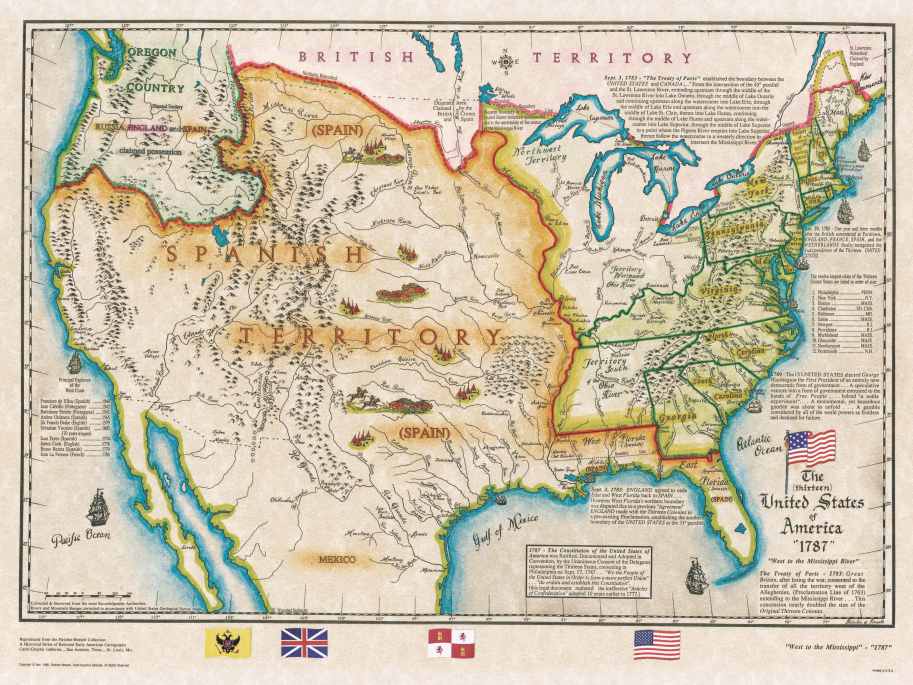
This map shows the beginning of the original 13 United States, from the Atlantic Ocean west to the Mississippi River. Spain claimed everything from the Mississippi River west, all the way to the Pacific Ocean, plus the watershed drainage on the Gulf of Mexico.
The treaty of Paris created a new nation in 1783 and doubled the size of the original 13 colonies, extending the western boundaries to the Mississippi River.
The United States Constitution replaced the Articles of Federation and new government of the people, by the people an for the people was formed.
Here you will find the original-13-states. From Delaware of 1781 to Rhode Island of 1790.
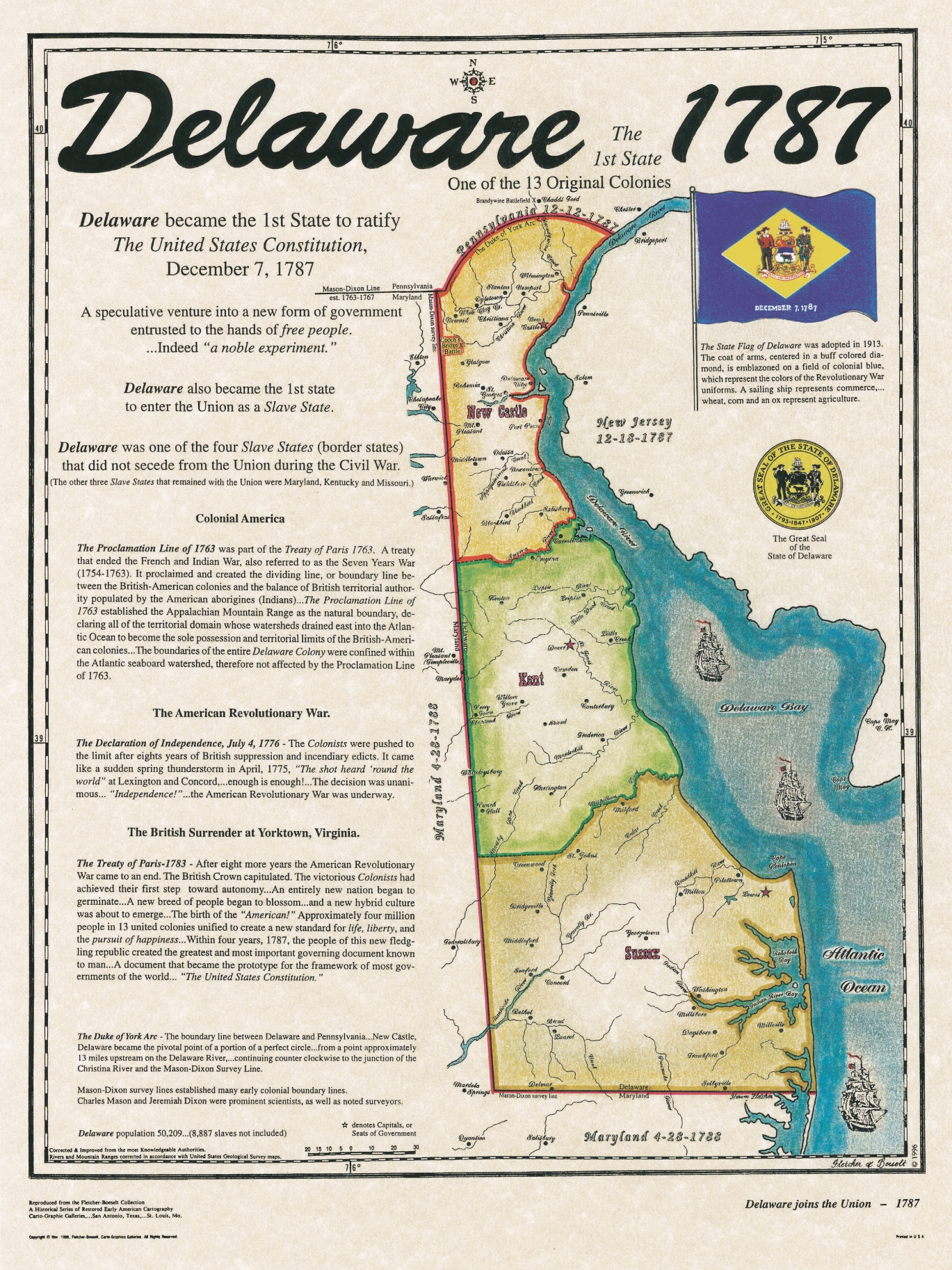
Delaware 1787
In 1787, Delaware was a small but influential state, known for its agriculture and shipping industries. It was the first state to ratify the U.S. Constitution. The population was diverse, with a mix of European settlers and African Americans, mainly engaged in farming, trade, and local government activities. Delaware entered the union as a "Slave State".
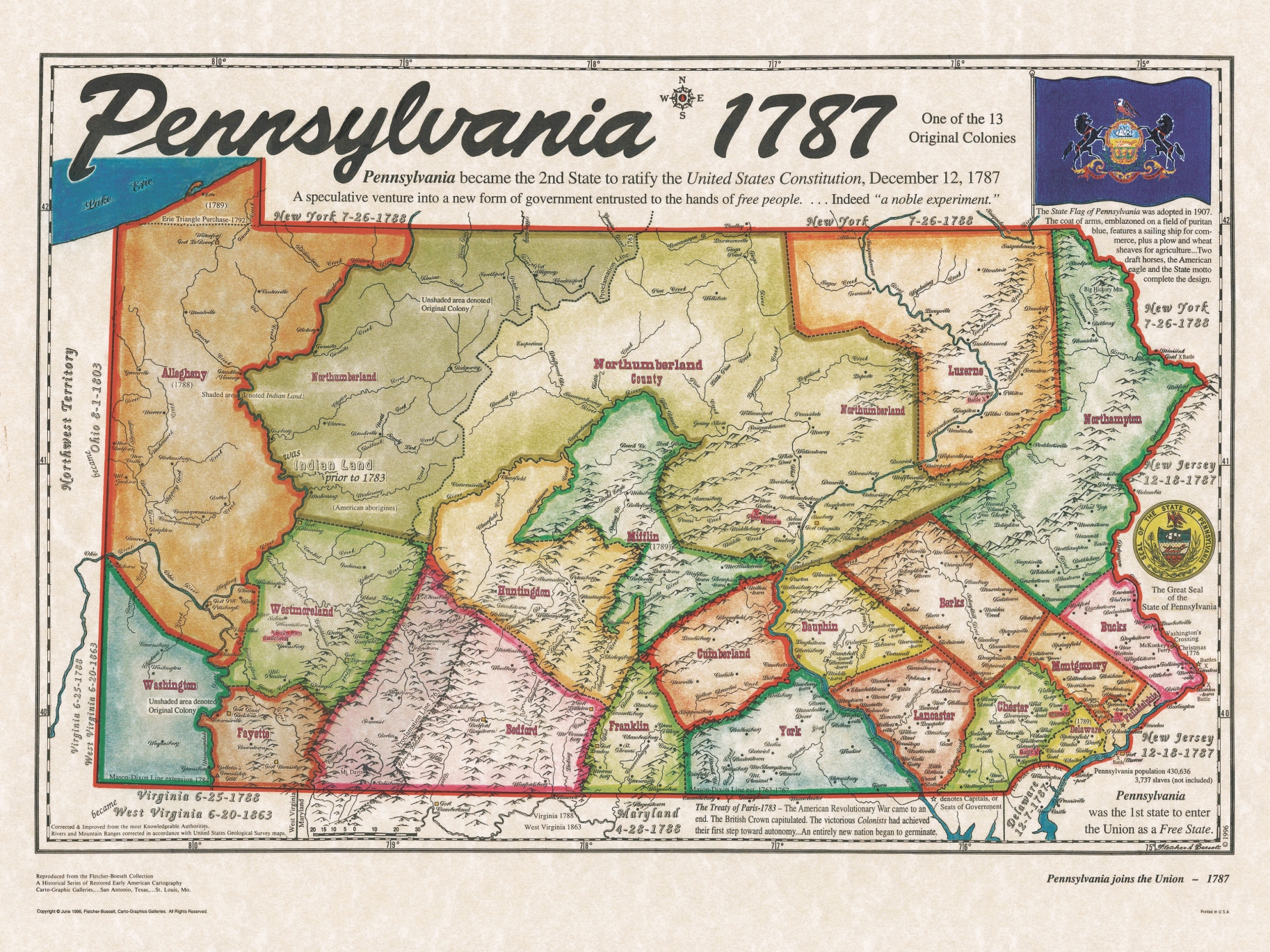
Pennsylvania 1787
Pennsylvania was established in 1681 when King Charles II granted William Penn a land charter, intended as a haven for Quakers and religious freedom. Its diverse population and fertile land made it prosperous. By 1787, Pennsylvania was a thriving center of commerce and politics, hosting the Constitutional Convention in Philadelphia. It became the second state to ratify the U.S. Constitution, officially joining the union and playing a key role among the 13 colonies.
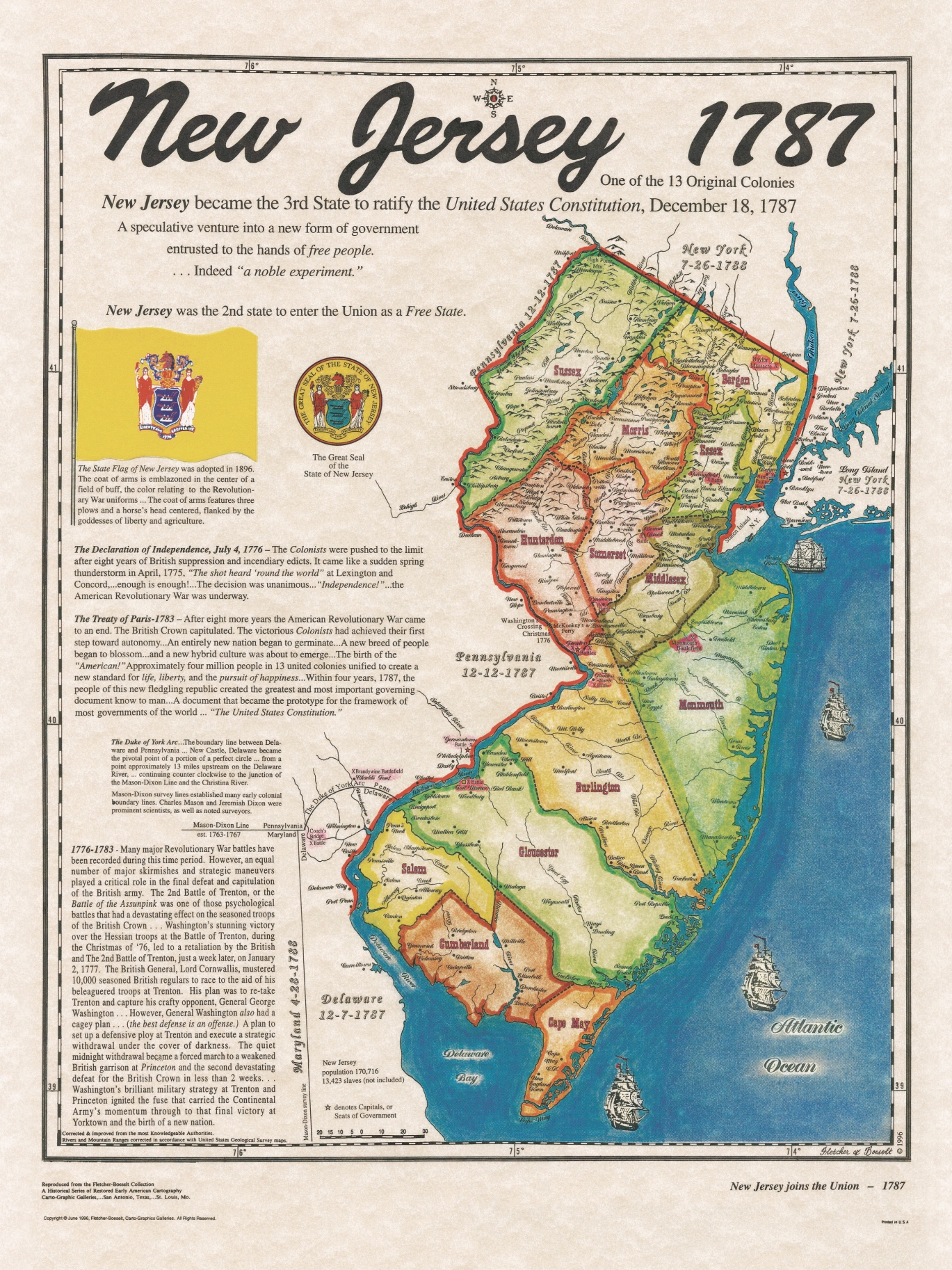
New Jersey 1787
New Jersey became one of the original 13 colonies through early English settlement in the 1660s, after the Dutch and Swedish presence. Granted to Sir George Carteret and Lord Berkeley by the Duke of York, it was eventually unified as a royal colony in 1702. On December 18, 1787, New Jersey became the third state to ratify the U.S. Constitution, solidifying its place in the new nation.
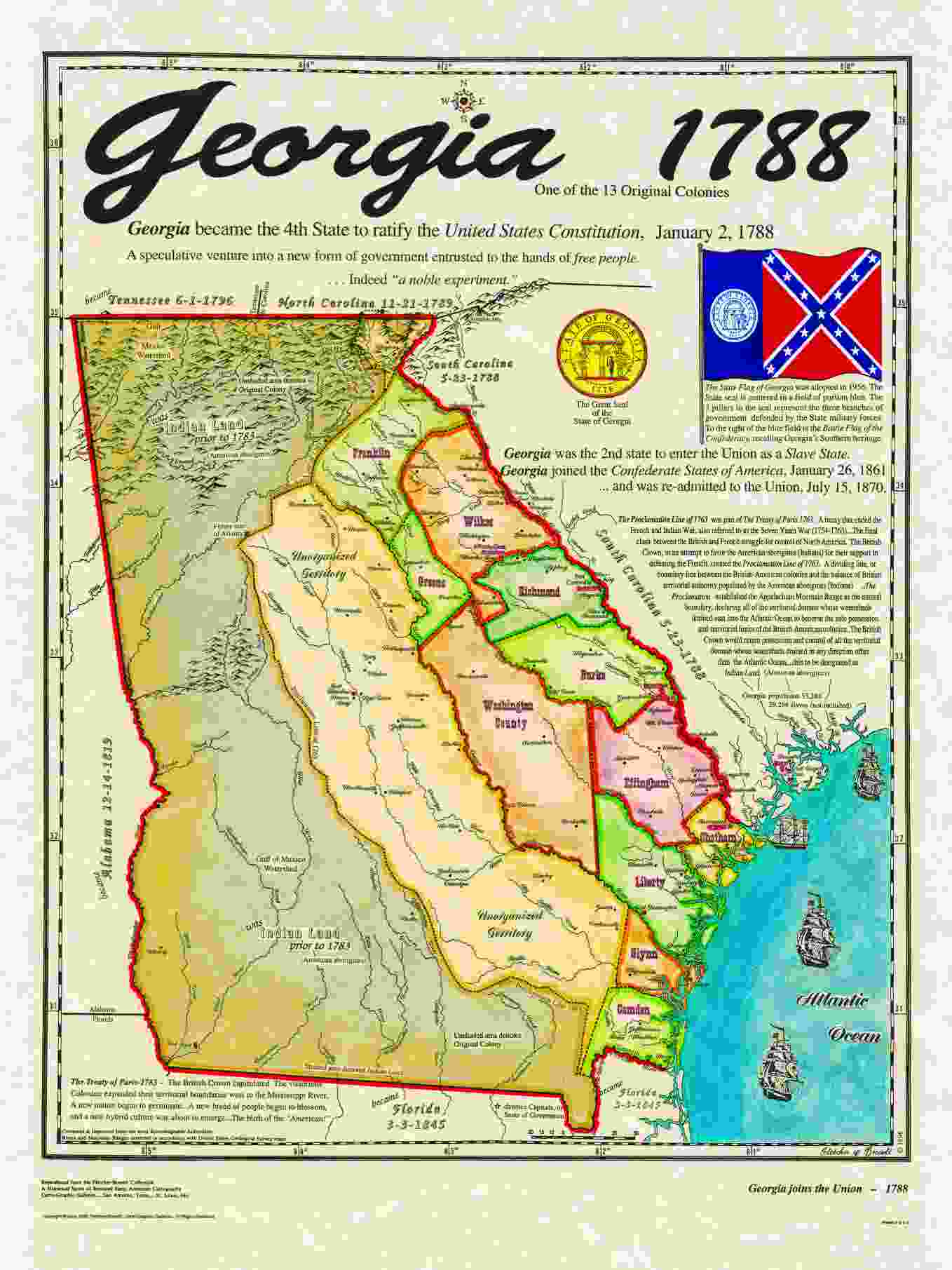
Georgia 1788
Georgia, founded in 1732 as a British colony by James Oglethorpe, was intended as a buffer against Spanish Florida and a haven for debtors. It developed plantations and a thriving port in Savannah. During the American Revolution, Georgia supported independence. On January 2, 1788, it became the fourth state to ratify the U.S. Constitution, securing its role as one of the original 13 colonies.
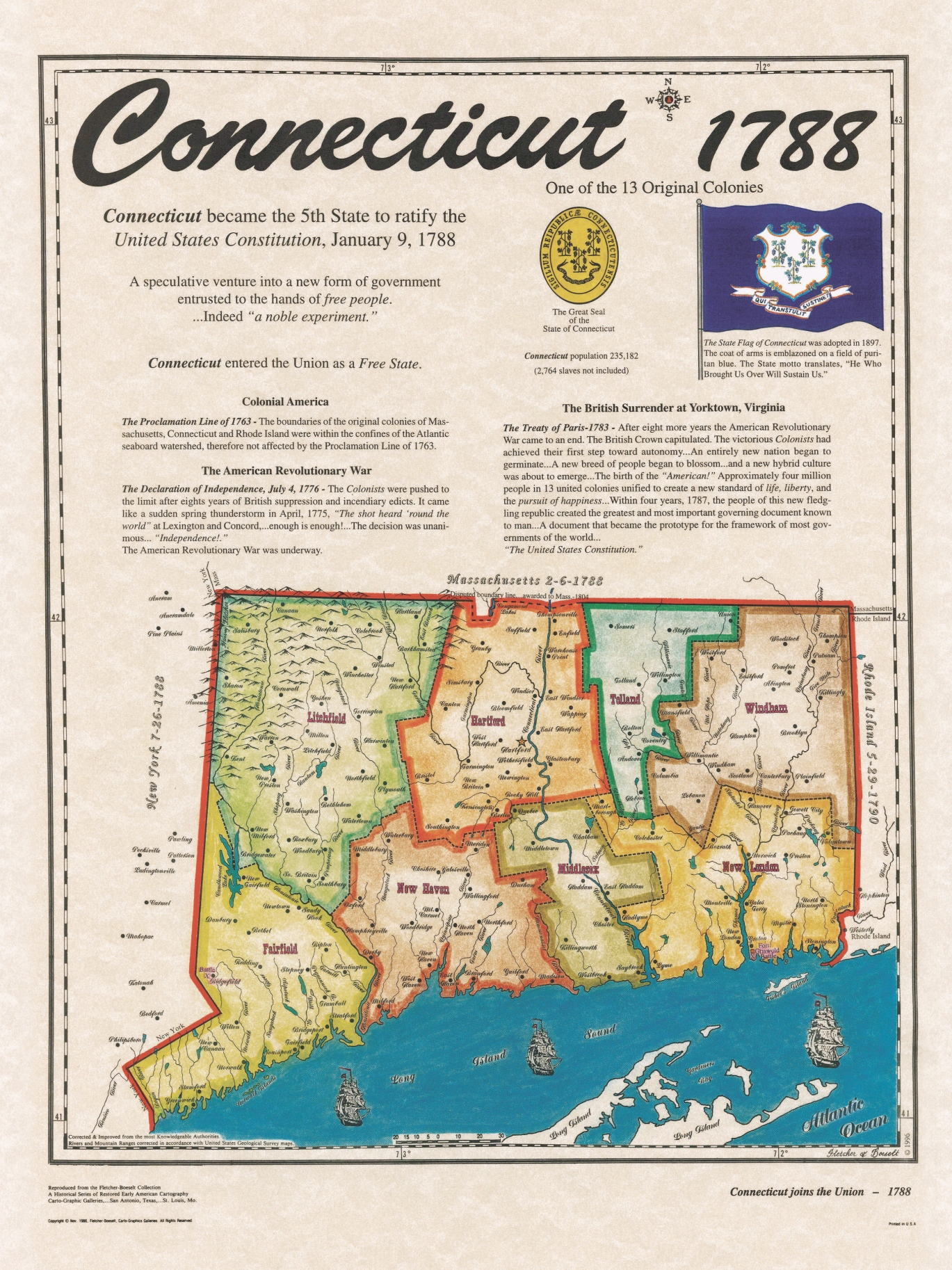
Connecticut 1788
IConnecticut was one of the original Thirteen Colonies, established by English settlers in the 1630s. It operated independently with its own charter and self-government. During the American Revolution, Connecticut supported independence. In 1788, it became the fifth state to ratify the U.S. Constitution, officially joining the newly-formed United States and solidifying its place among the original Thirteen Colonies.
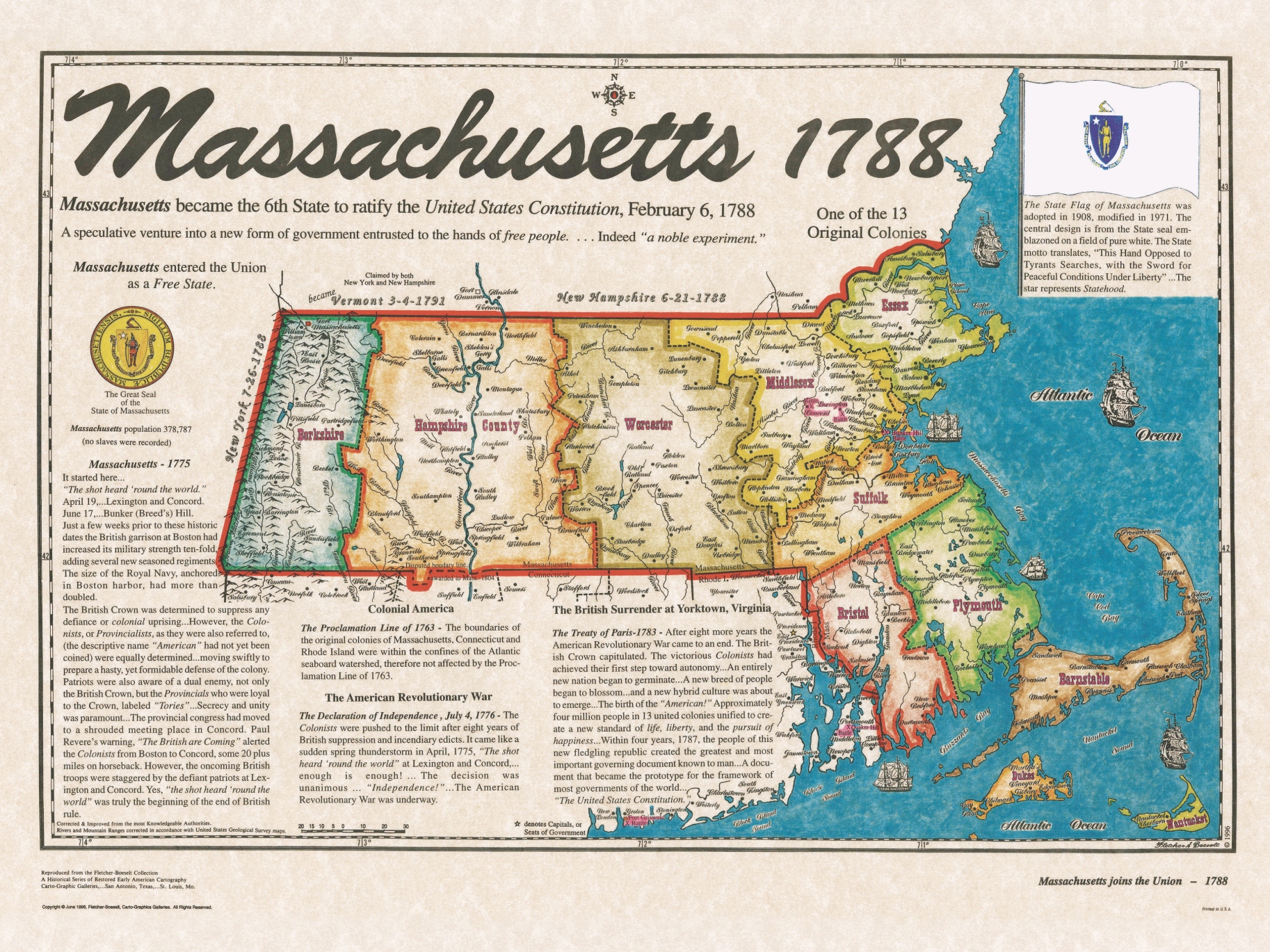
Massachusetts 1788
On February 6,1788, Massachusetts became the 6th state to ratify the U.S. Constitution. In 1788, Massachusetts was a key player in the early formation of the United States. As a hub of revolutionary activity, the state had a significant impact on shaping American independence. Massachusetts ratified the U.S. Constitution, contributing to the establishment of the federal government. The state's rich history, strong economy, and commitment to democratic principles solidified its position as a leader in the nation.
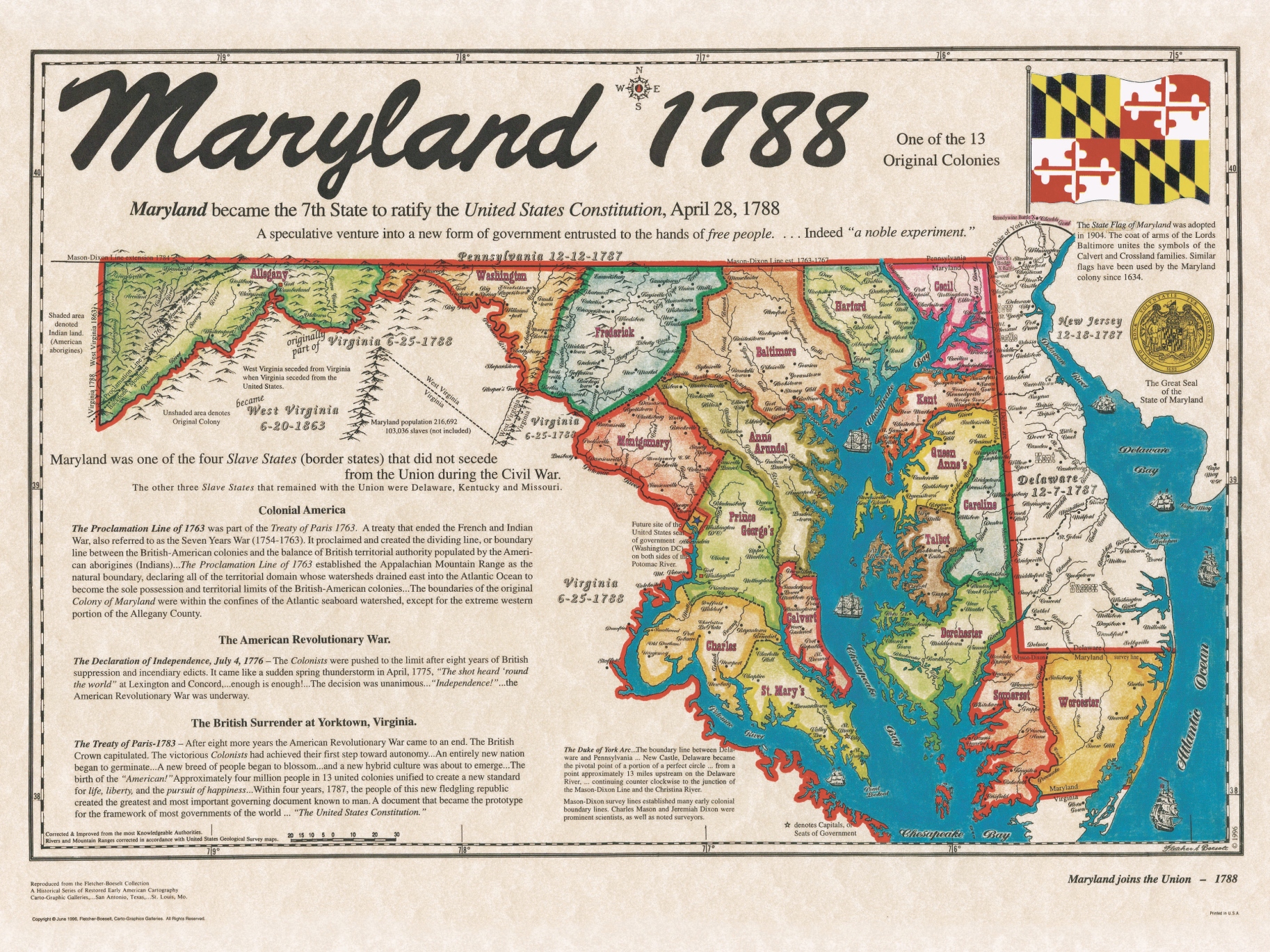
Maryland 1788
In 1788, Maryland was one of the original 13 colonies, known for its religious tolerance, especially for Catholics. Founded in 1634, it featured diverse agriculture, including tobacco plantations, worked by enslaved people. Maryland’s location on the Chesapeake Bay made it economically and strategically vital. In 1788, it became the seventh state to ratify the U.S. Constitution, supporting the new federal government and contributing to the nation’s early growth.
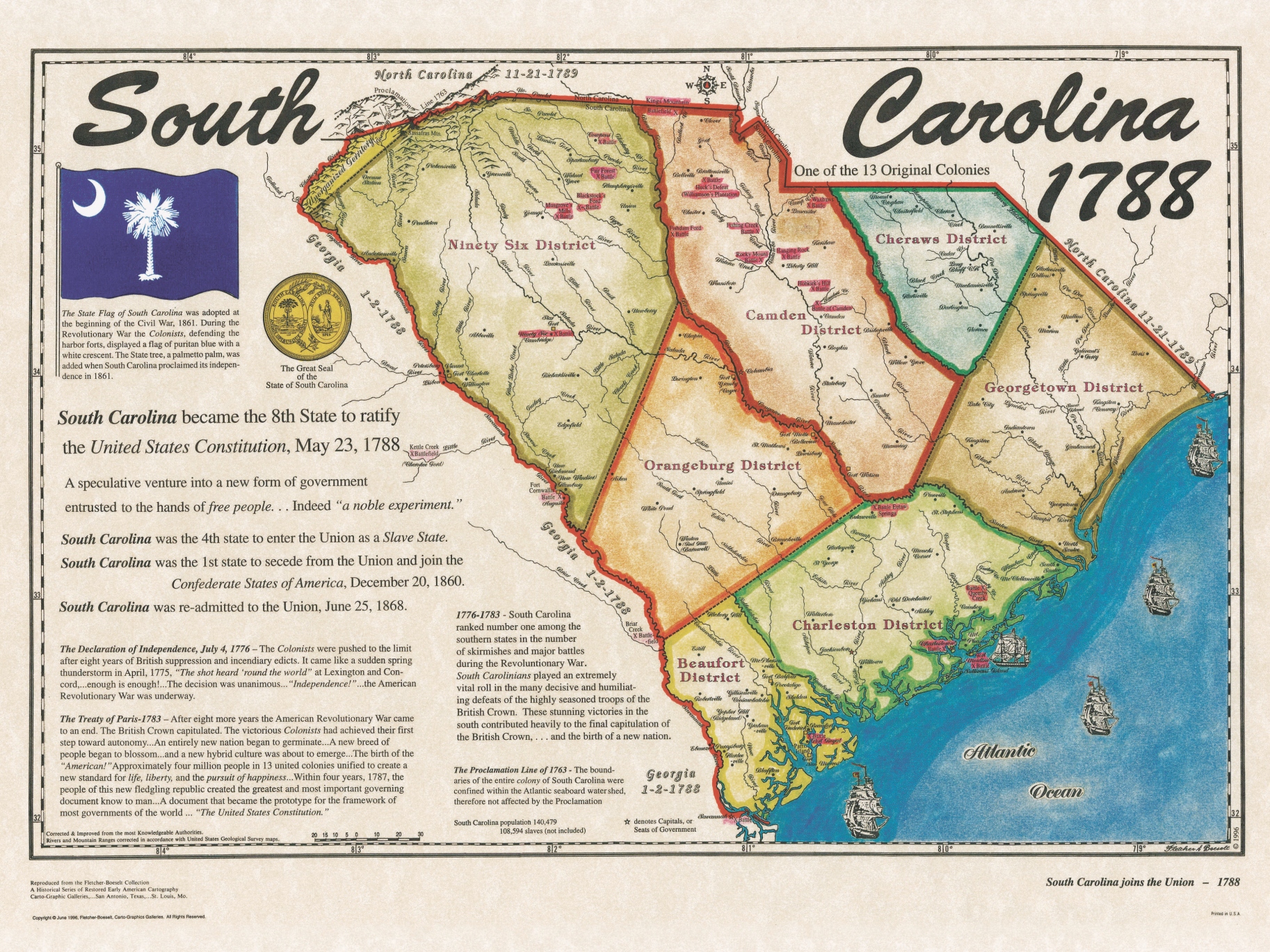
South Carolina 1788
In 1788, South Carolina was an important southern state, known for its rice and indigo plantations, worked mainly by enslaved Africans. Originally part of the Province of Carolina, it became a separate royal colony in 1719. South Carolina was a leader in colonial resistance and declared independence early. On May 23, 1788, it became the eighth state to ratify the U.S. Constitution, helping shape the new nation.
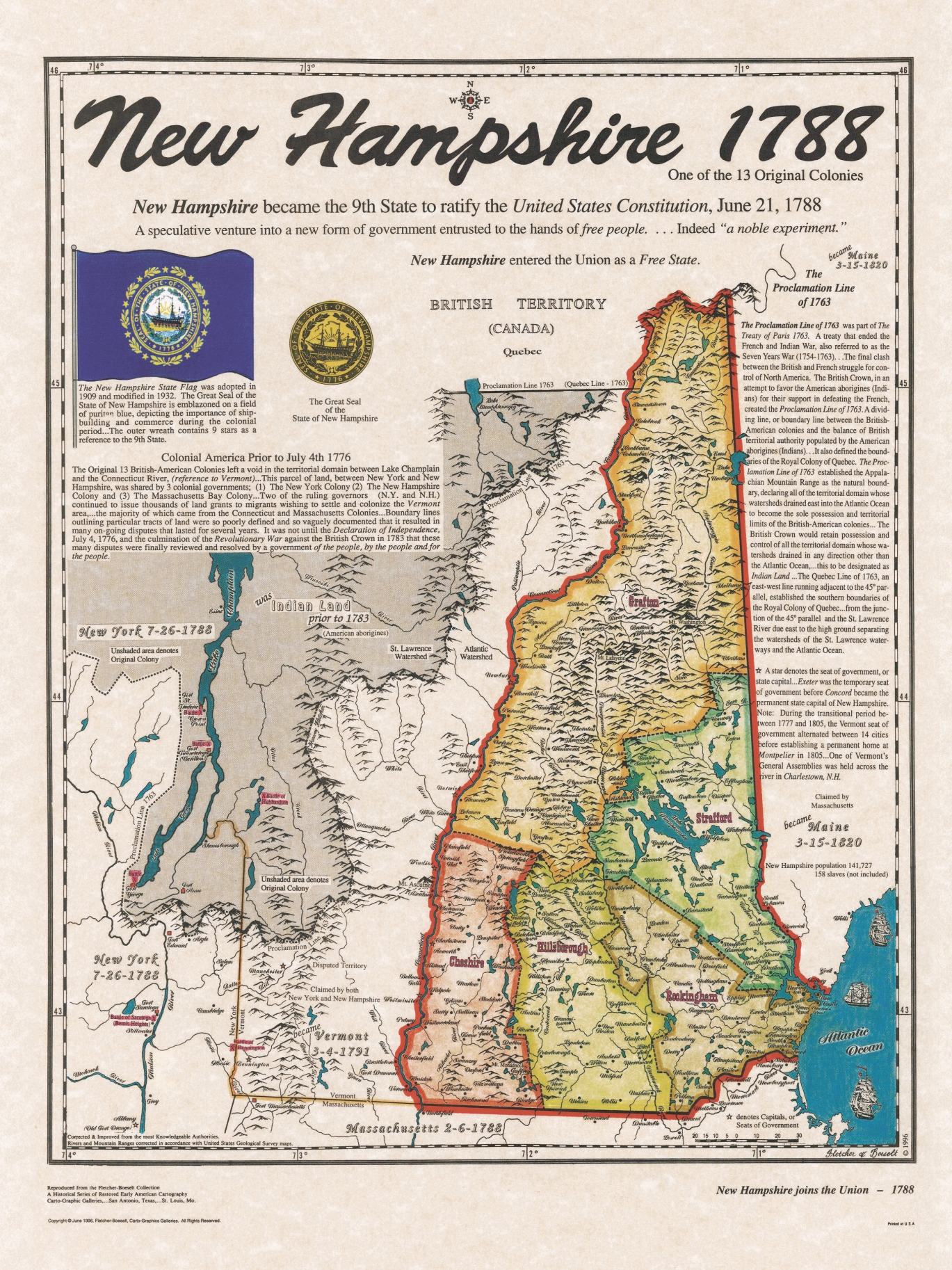
New Hampshire 1788
In 1788, New Hampshire was a small, rural state with a population focused on farming, fishing, and timber. Settled in the early 1600s, it valued self-government and town meetings. On June 21, 1788, New Hampshire became the ninth state to ratify the U.S. Constitution, officially bringing it into effect. The state’s independent spirit influenced the formation of the new American government.
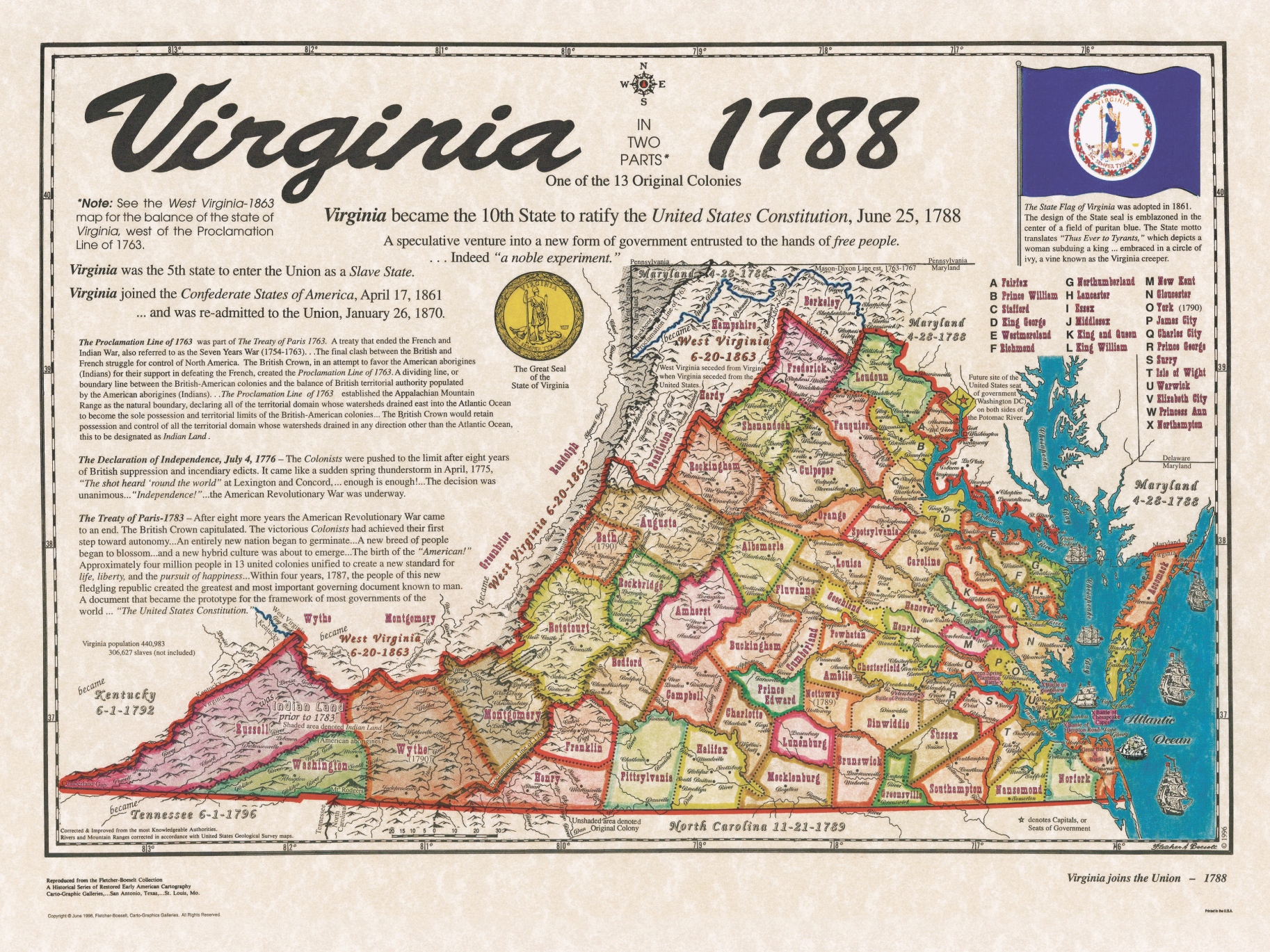
Virginia 1788
In 1788, Virginia was the largest and most influential of the 13 colonies, known for its tobacco plantations and prominent leaders like George Washington and Thomas Jefferson. As the tenth state to ratify the U.S. Constitution, Virginia’s support was crucial for the new nation. Its wealth, population, and political leadership helped shape early America’s government, culture, and economy, cementing its legacy in U.S. history.
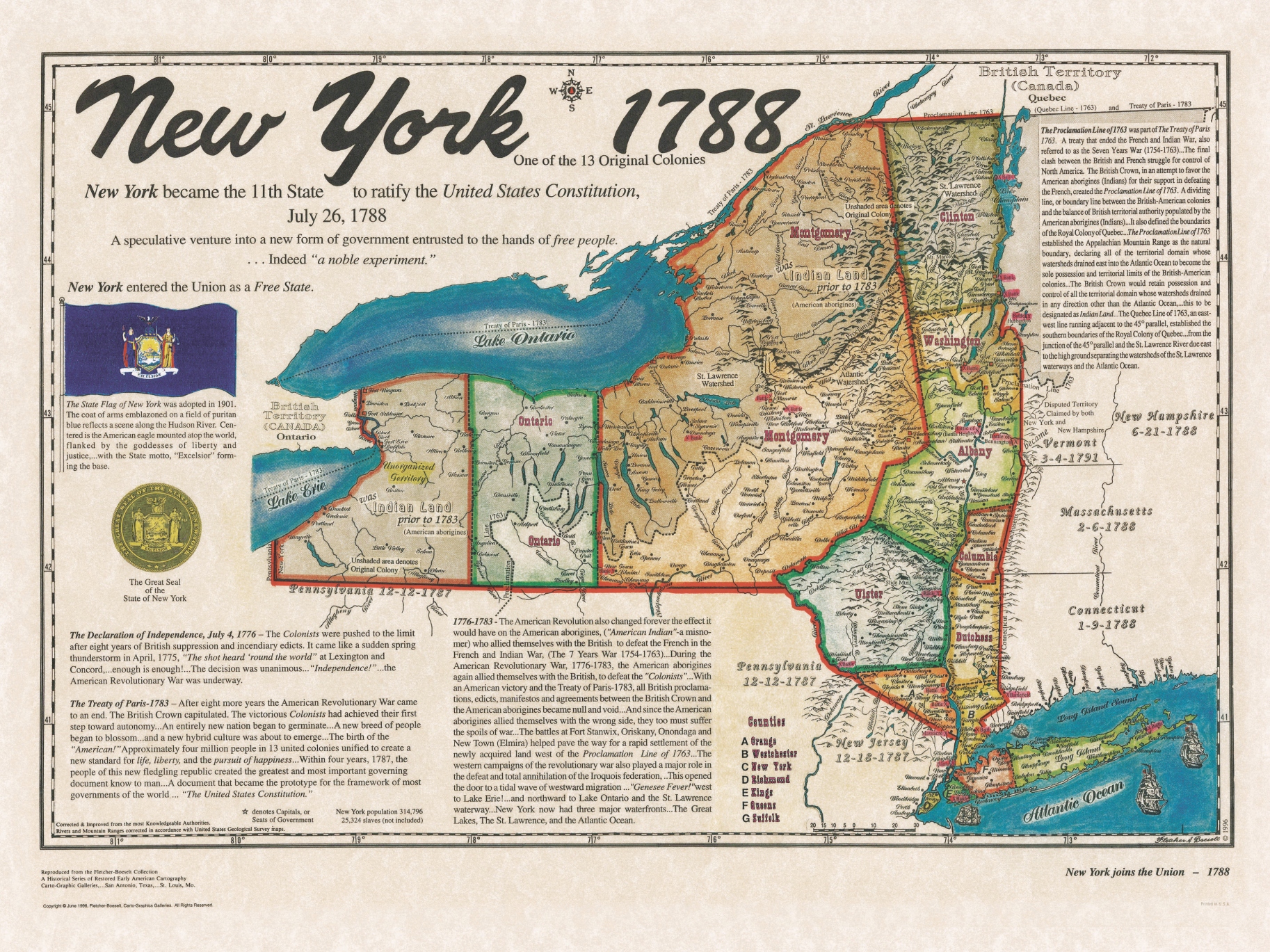
New York 1788
In 1788, New York, a strategically vital and populous colony, was a hub of trade and commerce, with New York City as its economic center. Originally settled by the Dutch, it became an English colony in 1664. On July 26, 1788, New York became the eleventh state to ratify the U.S. Constitution, ensuring its place among the original 13 colonies and helping unite the new nation.
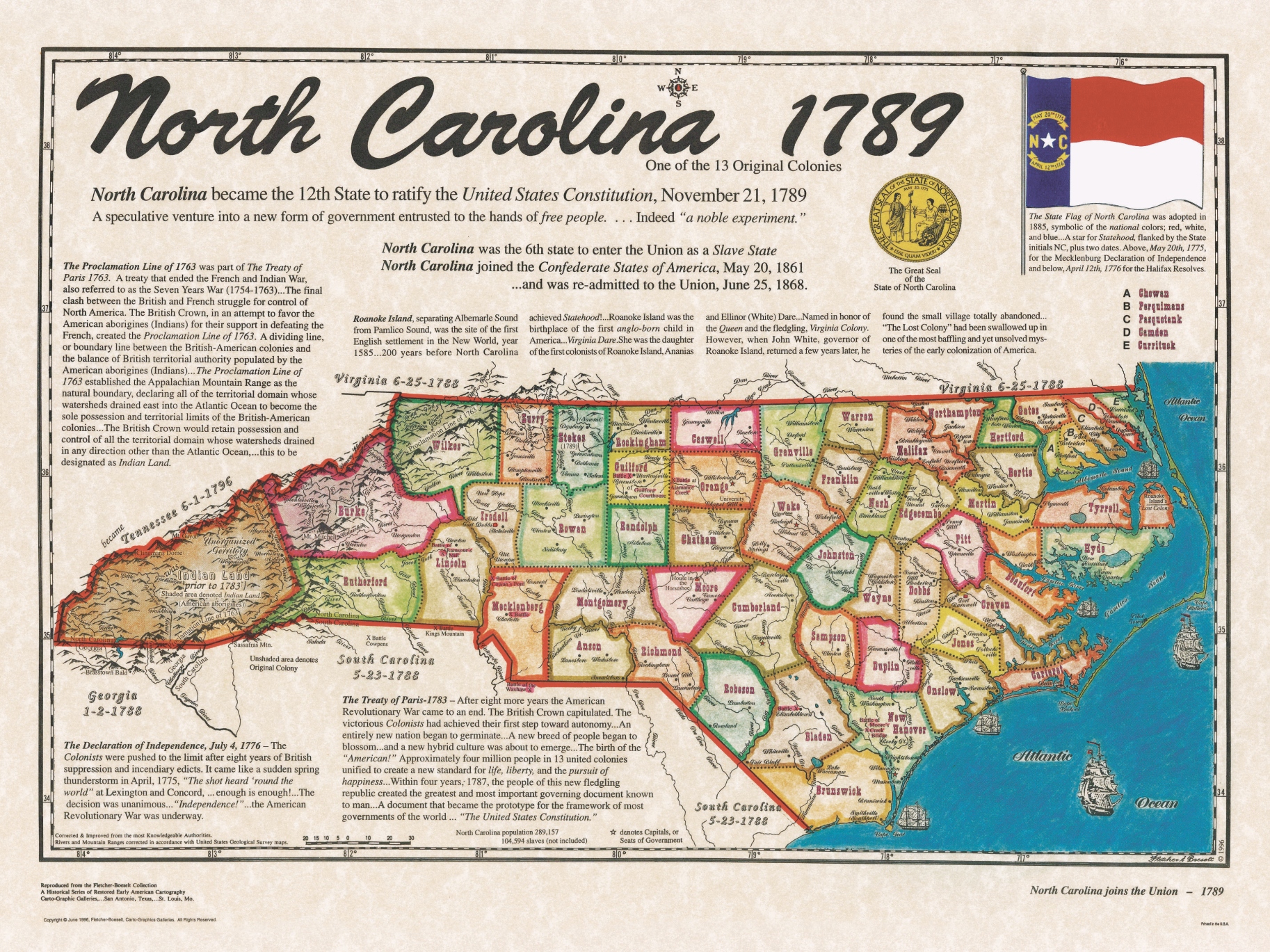
North Carolina 1788
North Carolina, originally part of the Province of Carolina, became a separate royal colony in 1729. Known for its small farms, naval stores, and increasing independence, it played a vital role in the American Revolution. Although hesitant about the new federal government, North Carolina became the twelfth state to ratify the U.S. Constitution on November 21, 1788, officially joining the United States and securing its place among the original 13 colonies.

Rhode Island 1790
Rhode Island, founded on principles of religious freedom by Roger Williams in 1636, was the last of the original 13 colonies to join the United States. Distrustful of strong central authority, it initially refused to ratify the U.S. Constitution. After mounting pressure and concerns about being excluded, Rhode Island finally ratified the Constitution on May 29, 1790, becoming the thirteenth state and securing its place in the new nation.


This map collection is protected under copyright laws. Any reproduction, distribution, or unauthorized use is strictly prohibited without the express written permission of the copyright holder.
