U.S. Statehood Maps
Collection of Historical State Maps upon Admission to the US:
A diverse collection of historical state maps showcases the unique characteristics of each state upon admission to the United States. From Vermont to Nebraska, these maps provide a visual journey through the history and development of the nation's states.
Maine 1820. Once a province governed by Massachusetts. The Compromise of 1820 or commonly referred to as the Missouri Compromise outlined the provision which Maine would become the 23rd State.
Missouri 1821. Actually petitioned statehood status in 1819, when Alabama was admitted as the 22nd state, however, the slavery issue was fast becoming a serious political issue, which delayed the recognition of Missouri until the Compromise of 1820 was drafted which prohibited slavery north of the 36th parallel.
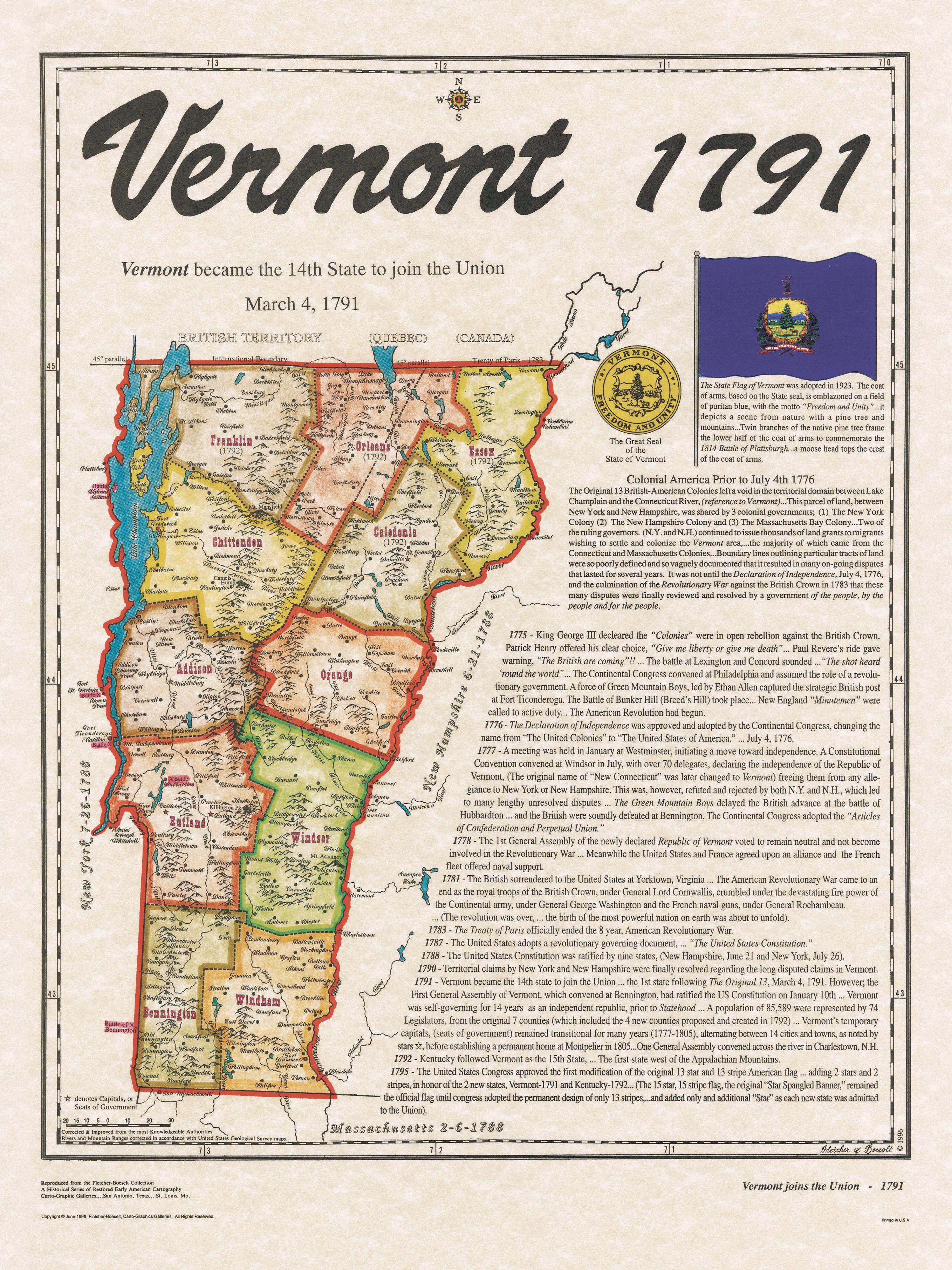
Vermont 1791 the 14th State
Vermont 1791, the 1st new state to achieve "statehood" status, entered the Union as a "Free State". Vermont became the 14th State, although Kentucky was also eligible to become number 14, politics chose Vermont, and Kentucky followed in 1792.
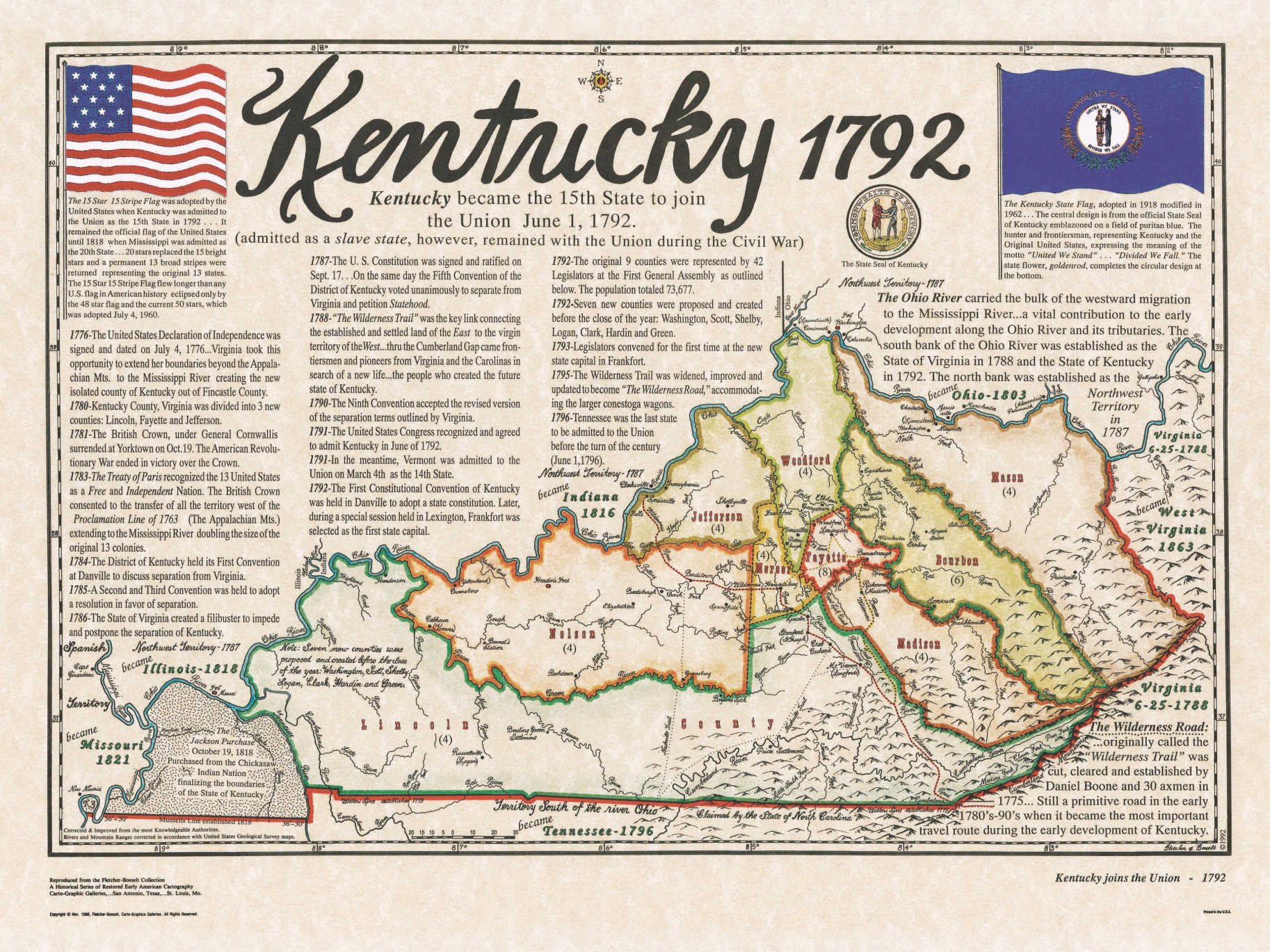
Kentucky 1782 the 15th State
Kentucky's "Statehood" changed the official American Flag to 15 stars and 15 strips, which became the original "Star Spangled Banner". This American Flag held the record as the longest flying flag in American history, until eclipsed by the 48 star flag in 1912.
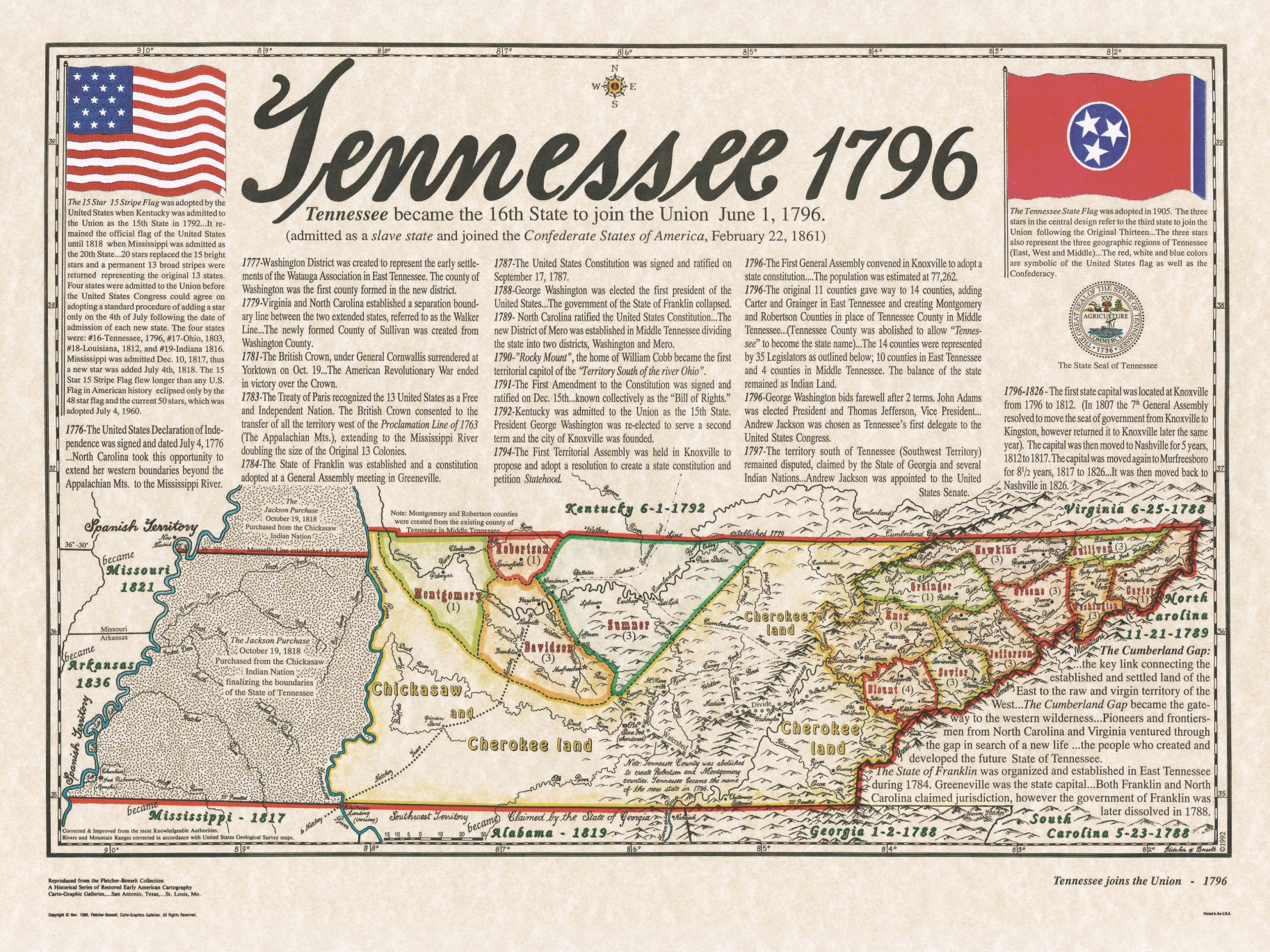
Tennessee 1796 the 16th State
Tennessee became the 16th state in 1796. George Washington bids farewell after 2 terms. John Adams was elected President and Thomas Jefferson, Vice President. Andrew Jackson was chosen as Tennessee"s first delegate to the United States Congress.
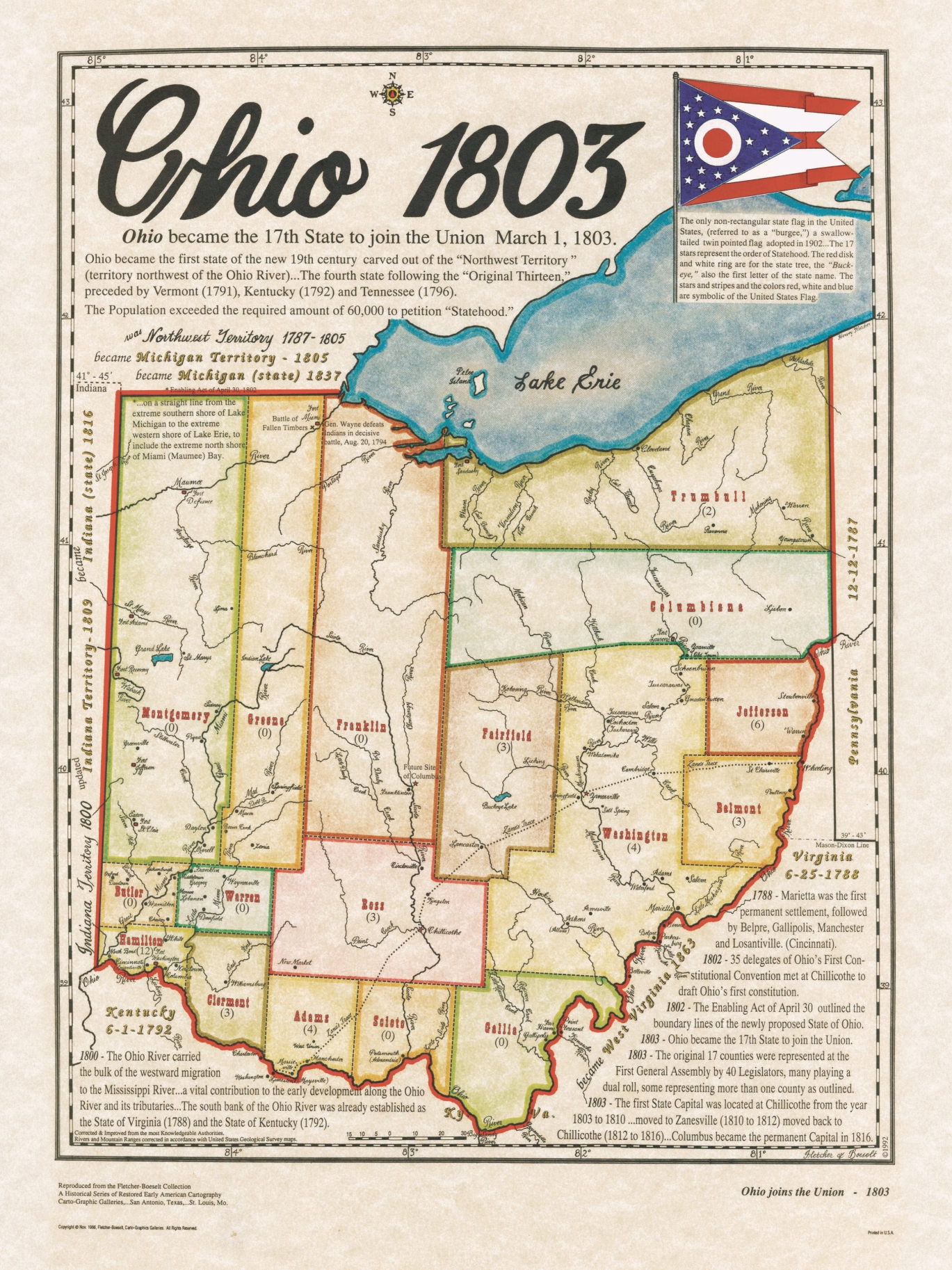
Ohio 1803 the 17th State
Ohio 1803 the 17th State, the 1st stste to be created out of the "Old Northwest Territory" that's north west of the Ohio River. 1803 was also the year of the Louisiana Purchase, whe the United States extended the western boundaries from the Mississippi River to the Continental Divide.
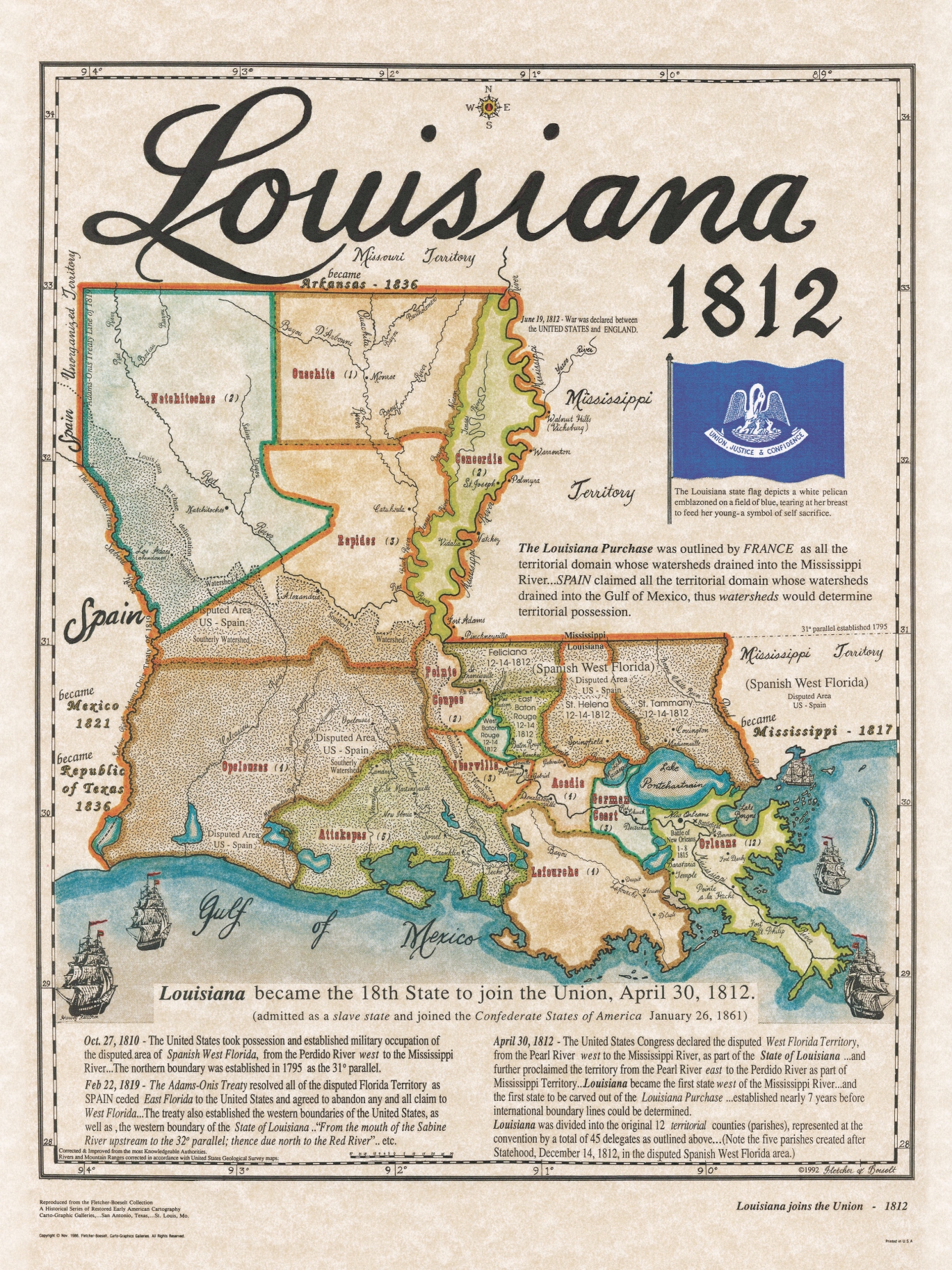
Louisiana 1812 The 18th State
Louisiana 1812 the 18th State was created during the War of 1812. Note the shaded area still claimed by Spain. It would be 7 years later, 1819, before the Adams-Onis Treaty would settle this territorial dispute with Spain.
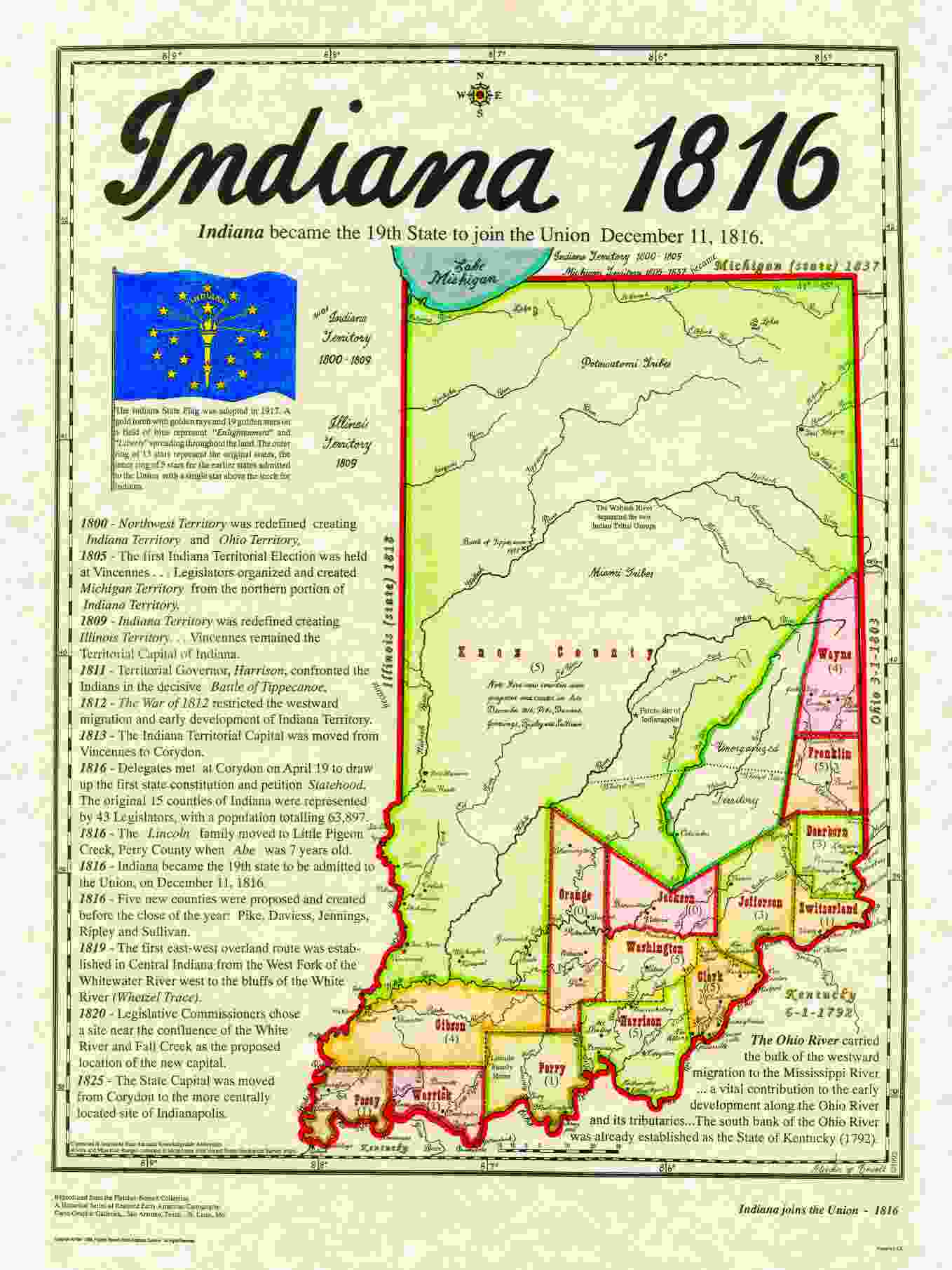
Indiana 1816 19th State
Indiana became a state in 1816 after settlers increased and pushed for self-government. The Indiana Territory drafted a constitution, and Congress approved statehood. On December 11, 1816, President James Madison signed the act admitting Indiana as the 19th state of the United States, with Corydon as its first capital.
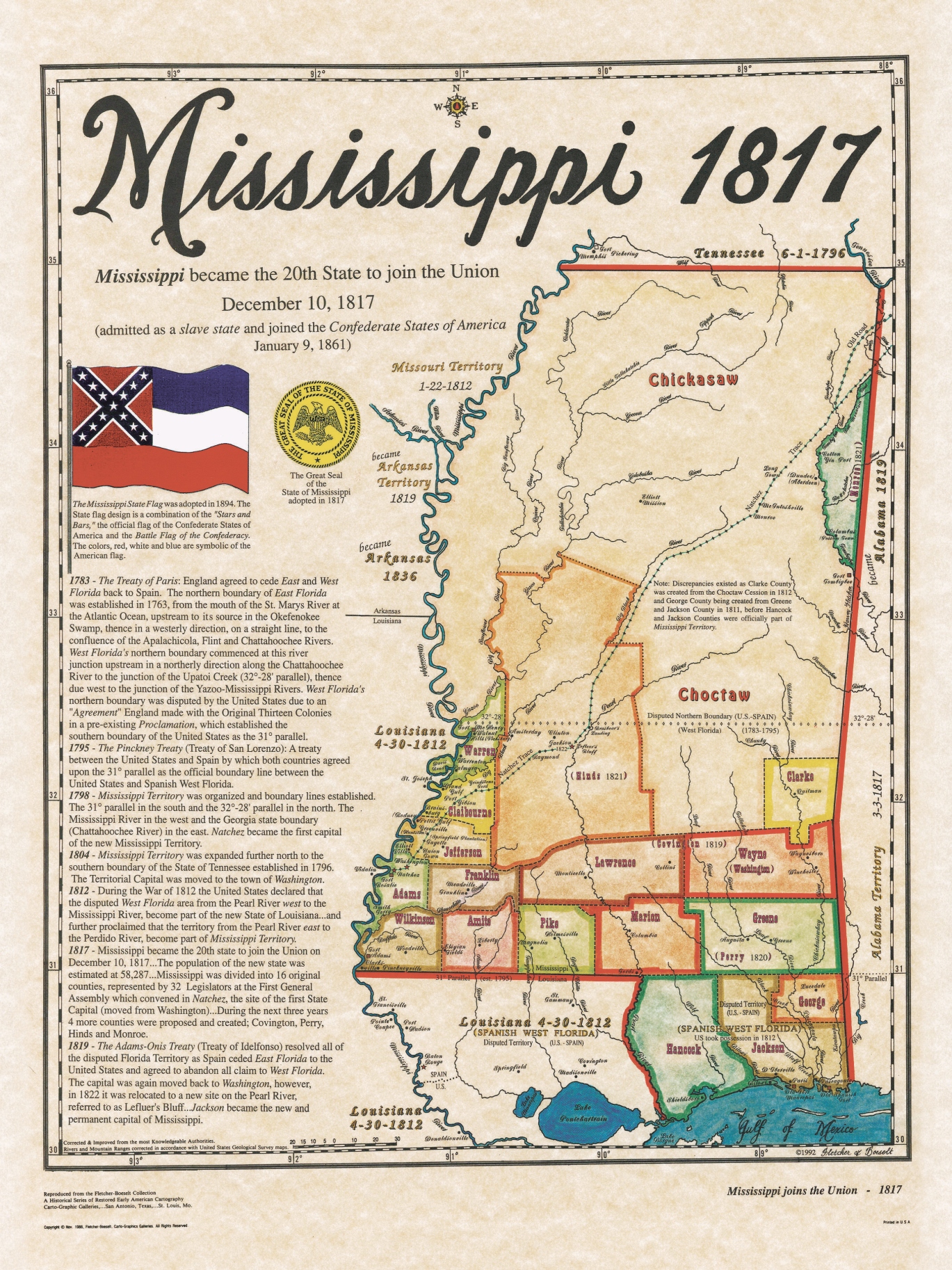
Mississippi 1817 20th State
Mississippi became a state in 1817 after growing settlement and demand for self-rule. The U.S. Congress passed an enabling act, locals drafted a constitution, and Mississippi was admitted on December 10 as the 20th state. Early Mississippi was largely rural, with fertile soil, cotton plantations, enslaved labor, small towns.
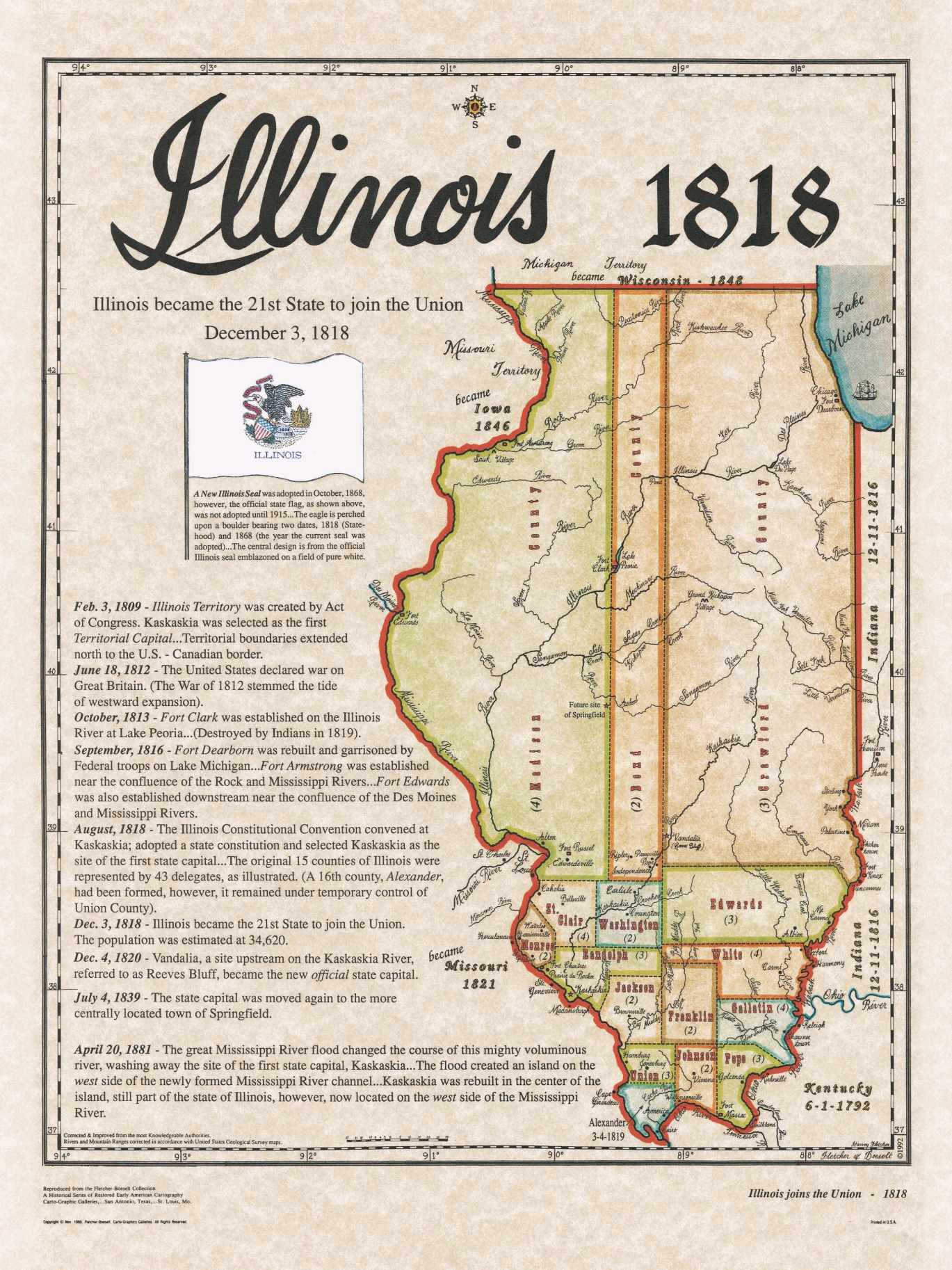
Illinois the 21st State 1818
In December of 1818 Illinois became the 21st State to join the Union. In 1818, Illinois was a frontier region characterized by vast prairies, forests, and scattered settlements along rivers. The population rapidly grew due to westward migration. To gain self-governance, residents petitioned for statehood. Congress approved, and a state constitution was written. On December 3, 1818, Illinois became the 21st state, with Kaskaskia as its first capital and an economy based on agriculture and trade.
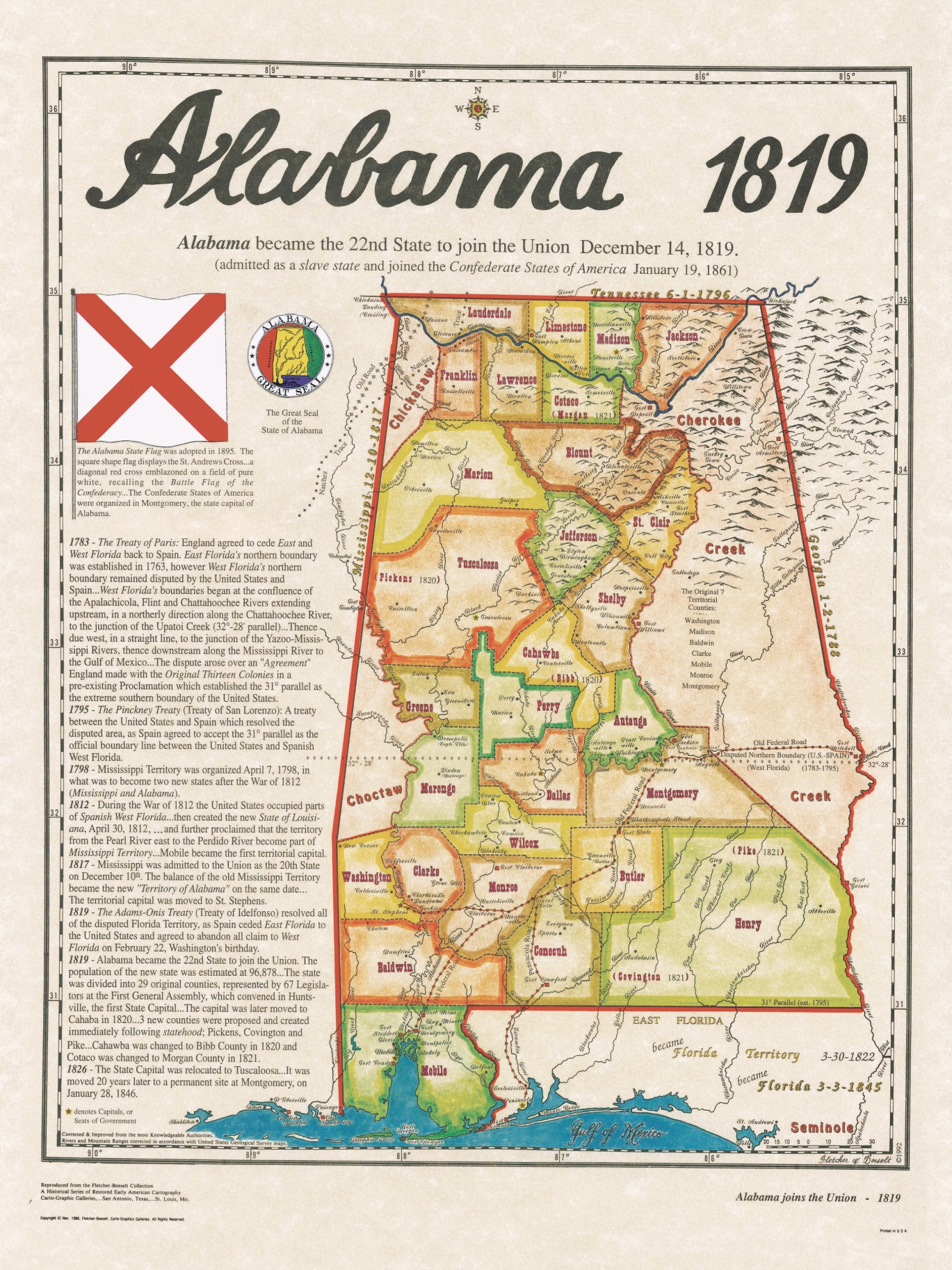
Alabama 1819 22nd State
Alabama the 22nd State to join the Union. In 1817 Mississippi was admitted to the Union as the 20th State. The balance of old Mississippi Territory became the "Territory of Alabama". By 1819 Alabama became the 22nd State to be admitted to the Union.
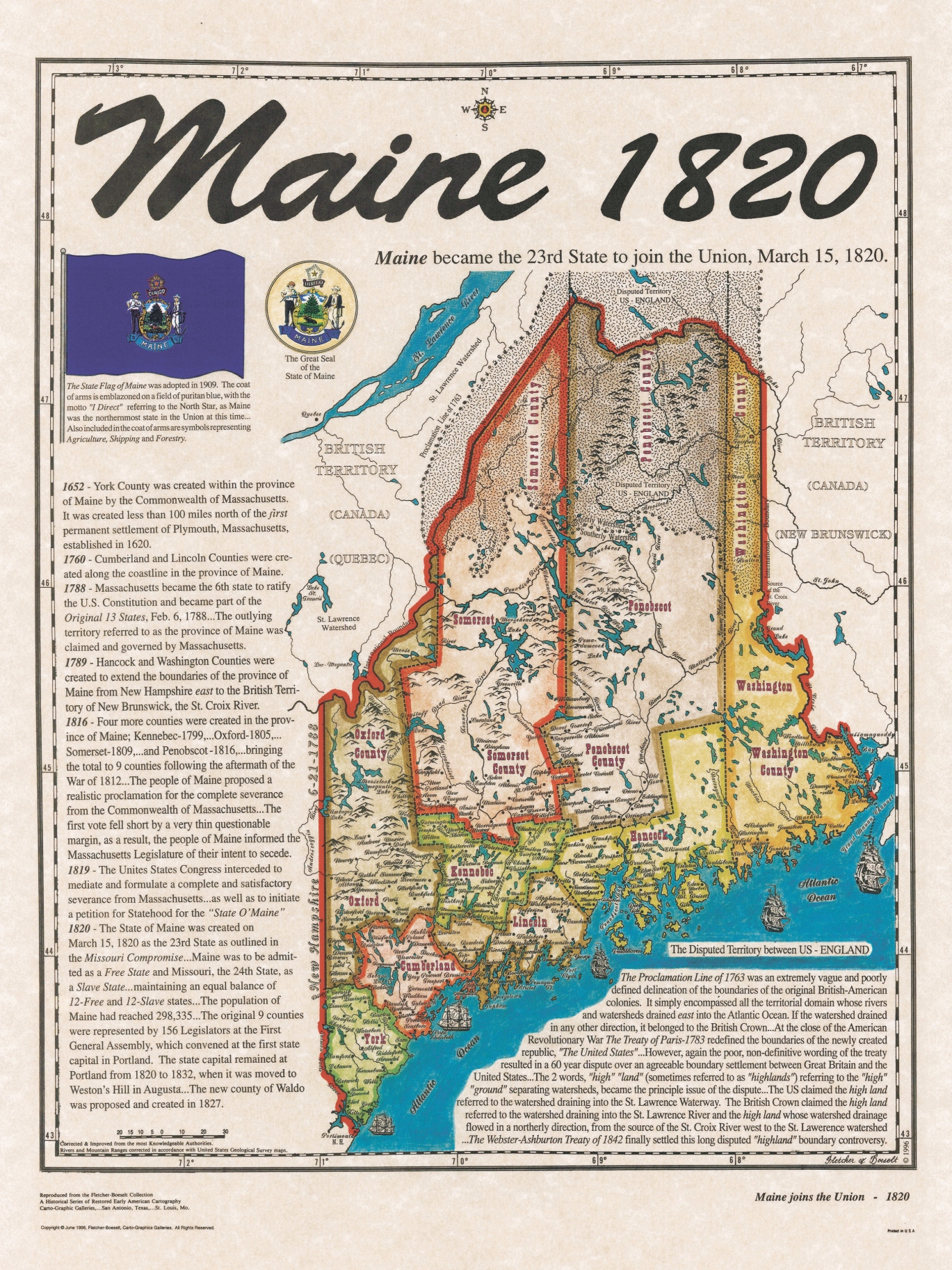
Maine 1820 23rd State
Maine, once part of Massachusetts, sought independence due to geographic distance and local interests. Pressure grew for statehood, and as part of the Missouri Compromise—balancing free and slave states—Congress approved Maine’s admission. On March 15, 1820, Maine became the 23rd state, known for its forests, coastal fishing villages, and a society centered around agriculture and maritime industries.
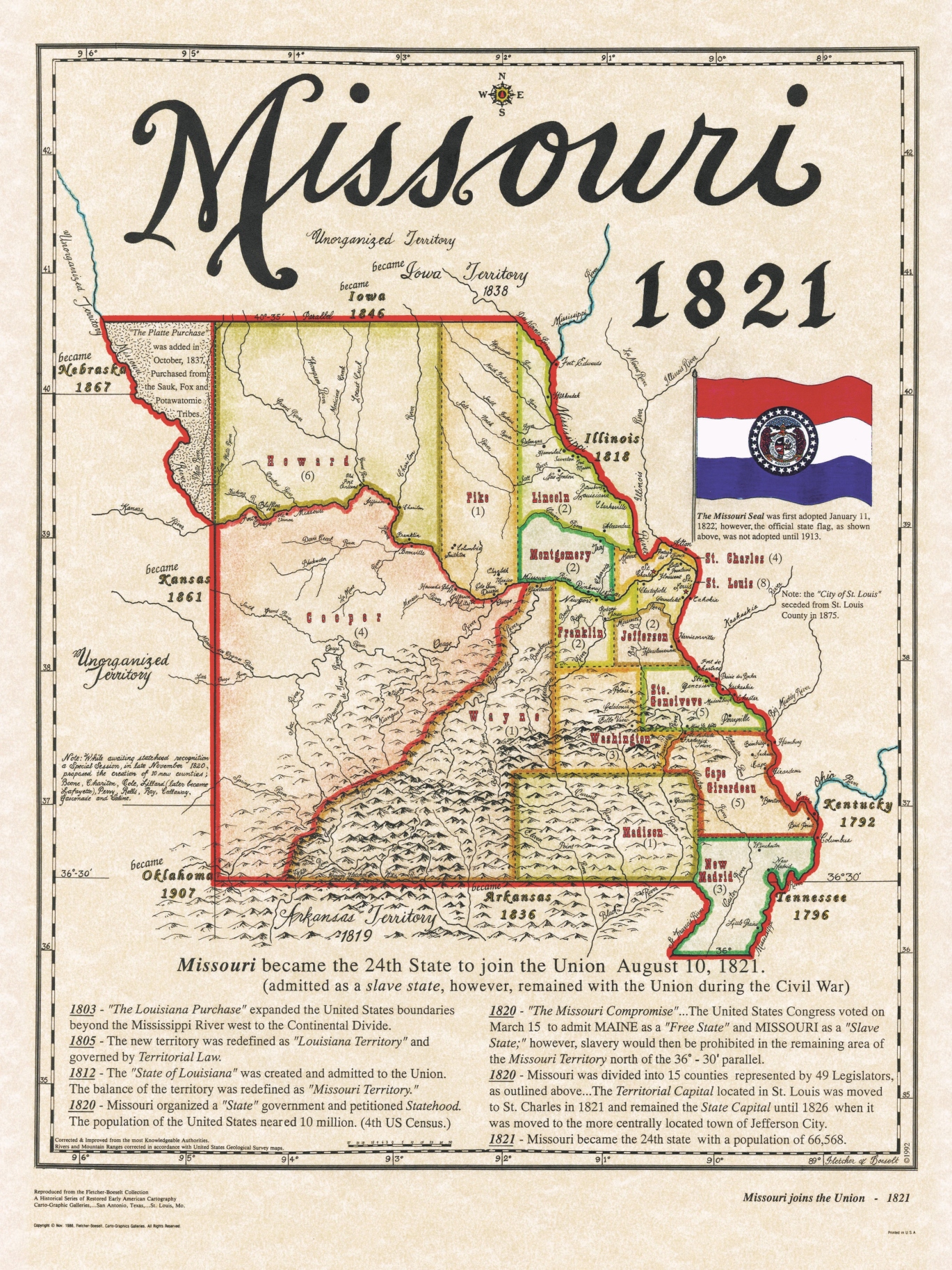
Missouri 1821 24th State
Missouri sought statehood as its population grew rapidly with westward migration. The process sparked heated debate over the expansion of slavery. The Missouri Compromise allowed Missouri’s admission as a slave state, balanced by Maine as a free state. After drafting a constitution, Missouri was admitted as the 24th state on August 10, 1821. Early Missouri featured frontier settlements, river trade, and diverse communities.
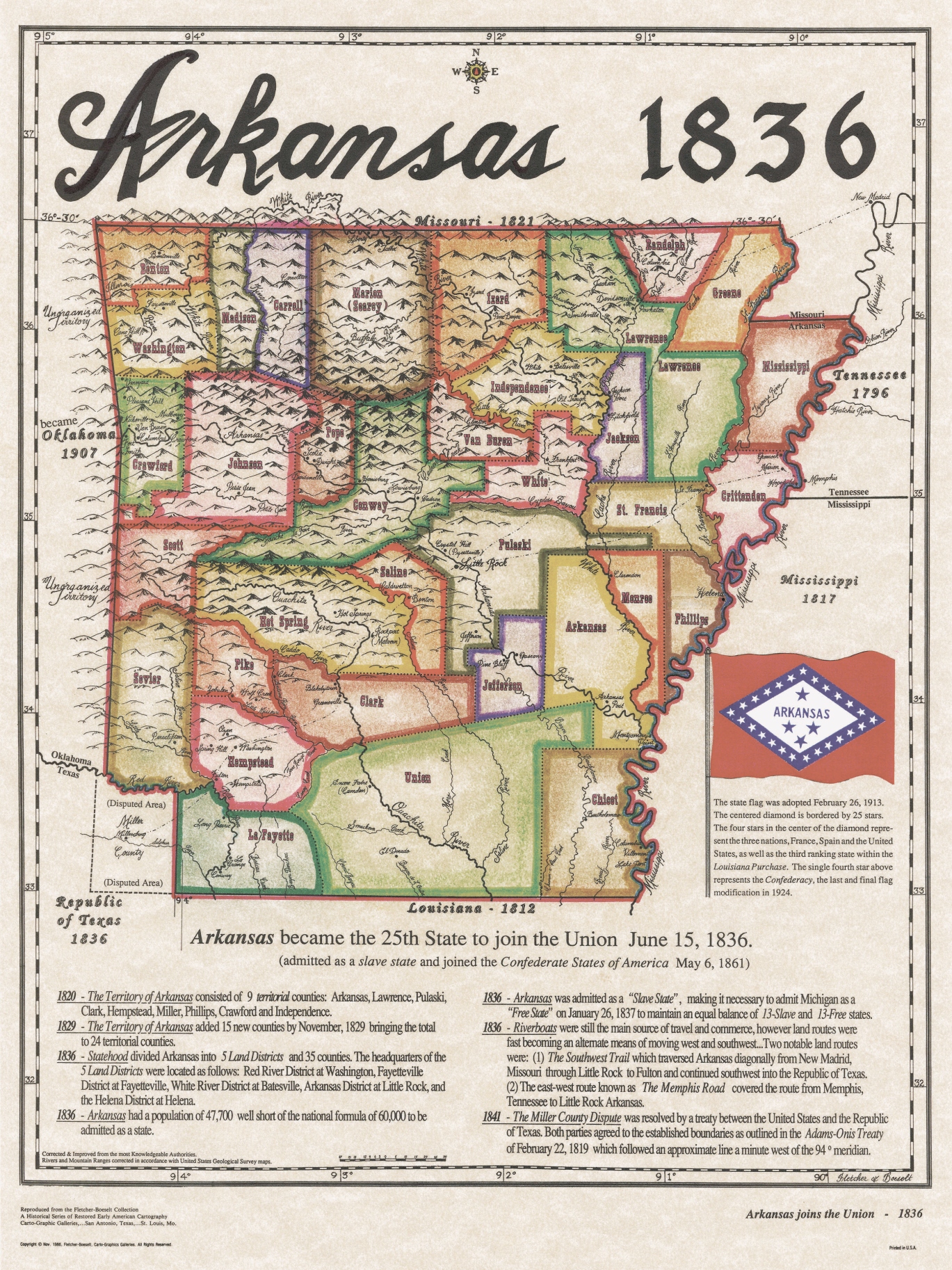
Arkansas 1836 25th State
In 1836, Arkansas entered the Union as the 25th state. The region had been part of the Louisiana Purchase of 1803. Arkansas' statehood marked its growth from a frontier territory to a recognized state, known for its fertile lands and strategic location along the Mississippi River. The state's economy revolved around agriculture, particularly cotton production, shaping its early development.
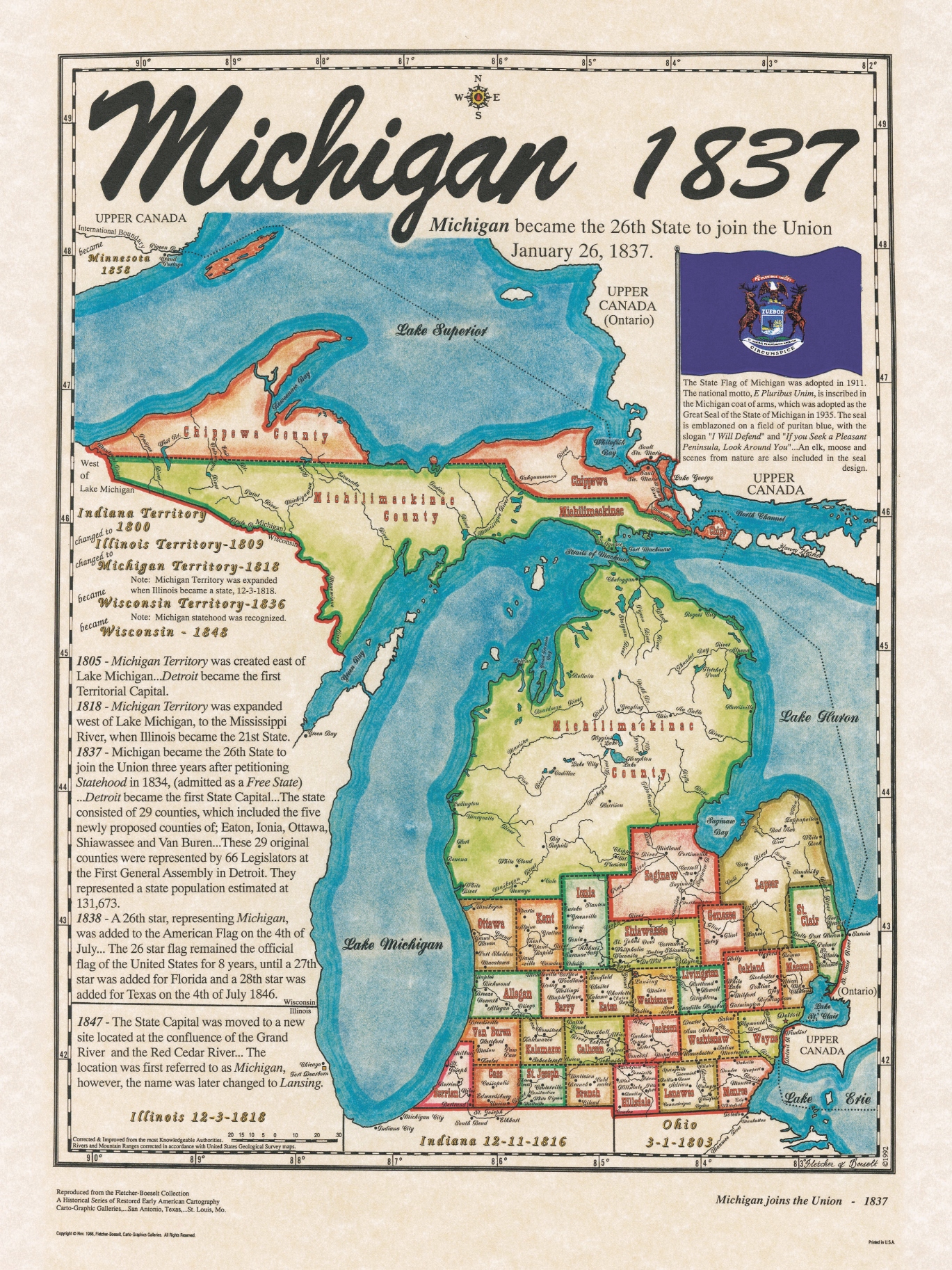
Michigan 1837 26th State
Michigan became the 26th State to join the Union three years after petitioning for Statehood in 1834. A 26th star, representing Michigan, was added to the American Flag on the 4th of July 1837 and remained the 26 star flag of the United States for 8 years until a 27th star was added for Florida in 1845.
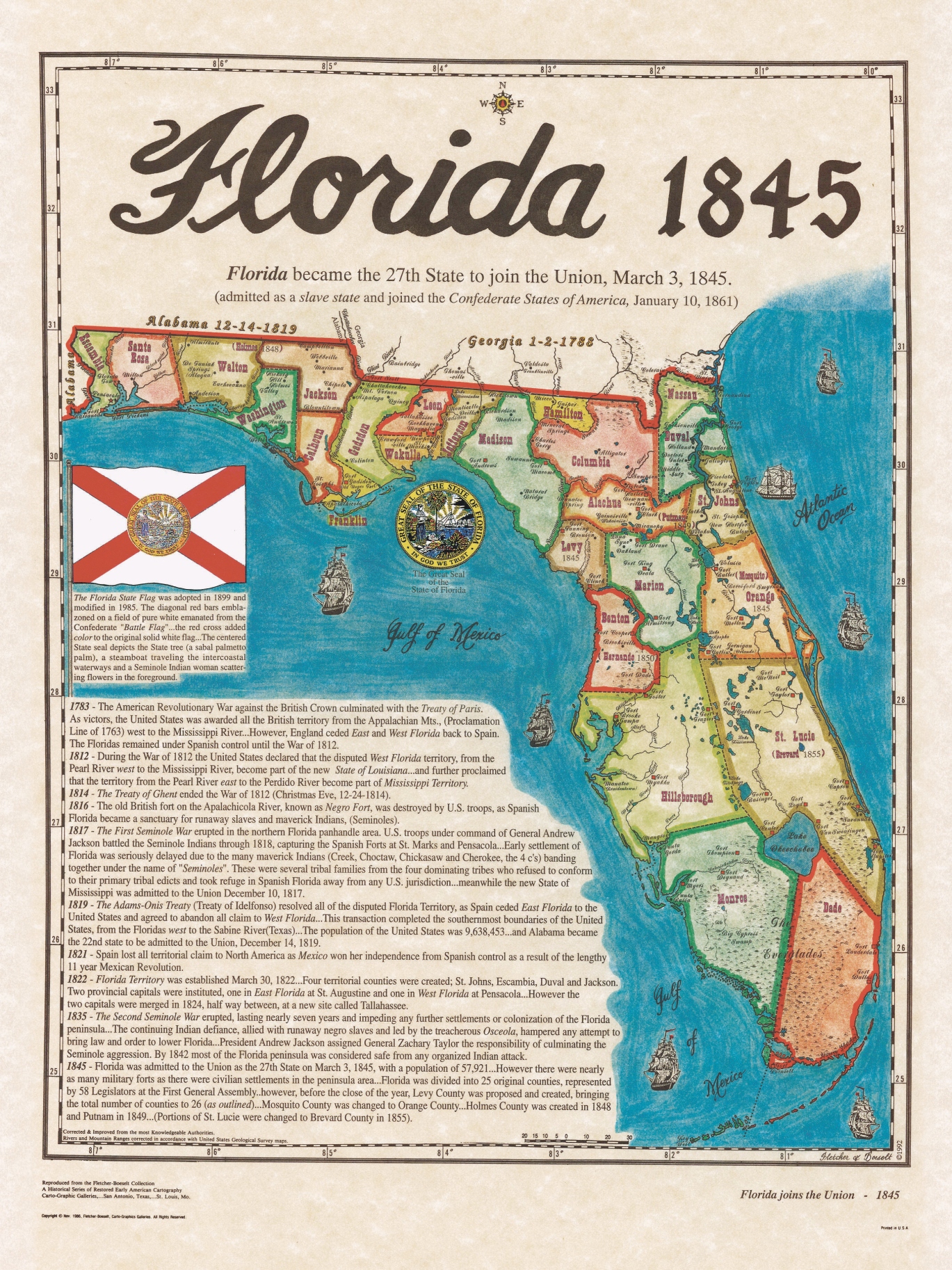
Florida 1845 27th State
In 1845, Florida officially became the 27th state of the United States. Prior to statehood, Florida had a turbulent history, changing hands between Spain, Great Britain, and the United States. The admission of Florida as a state further solidified U.S. control over the territory and marked its growing influence in the southern region.
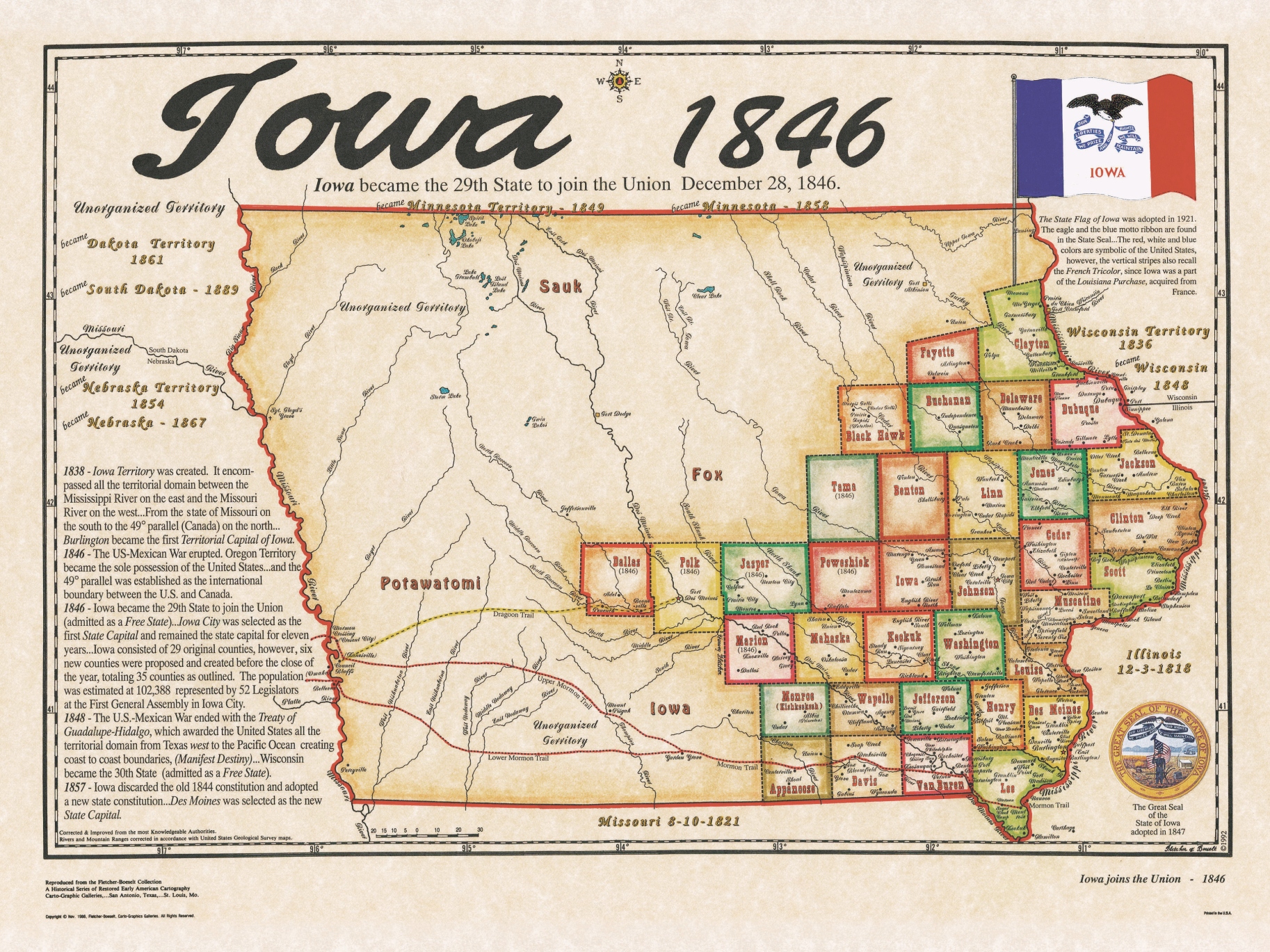
Iowa 1846 29th State
In 1846, Iowa became the 29th state of the United States. Known as the "Hawkeye State," Iowa's statehood marked its rapid development from a frontier territory to a settled state. Iowa's establishment brought new opportunities for settlers, spurred by fertile lands and the promise of economic growth through agriculture and industry.
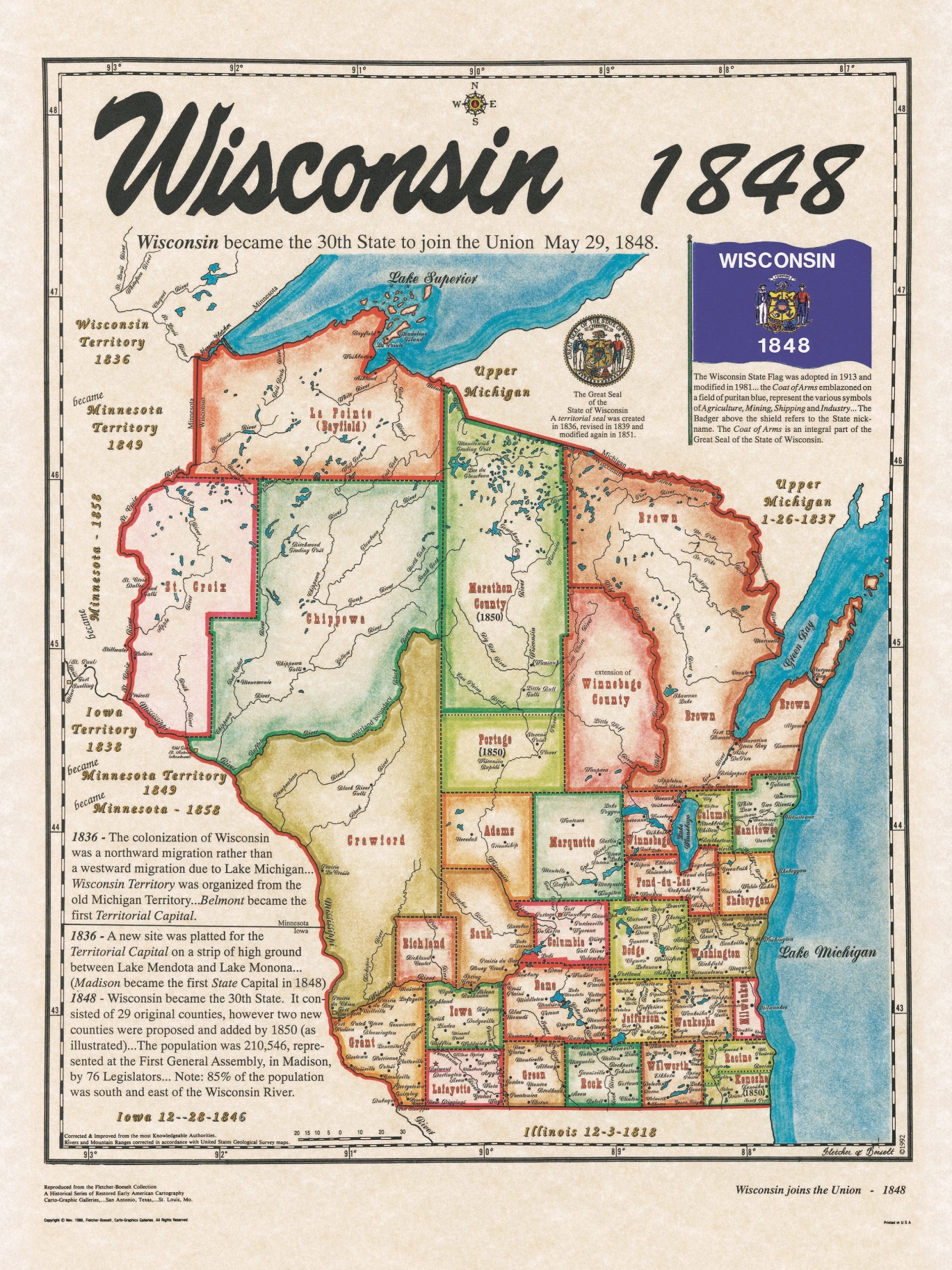
Wisconsin 1848 30th State
A hand-colored historical map of Wisconsin post-statehood in 1848 showcases its boundaries extending from the Great Lakes to the Mississippi River. Wisconsin's admission as the 30th state reflected the region's flourishing industries, particularly in dairy farming and lumber production, shaping its early economy.
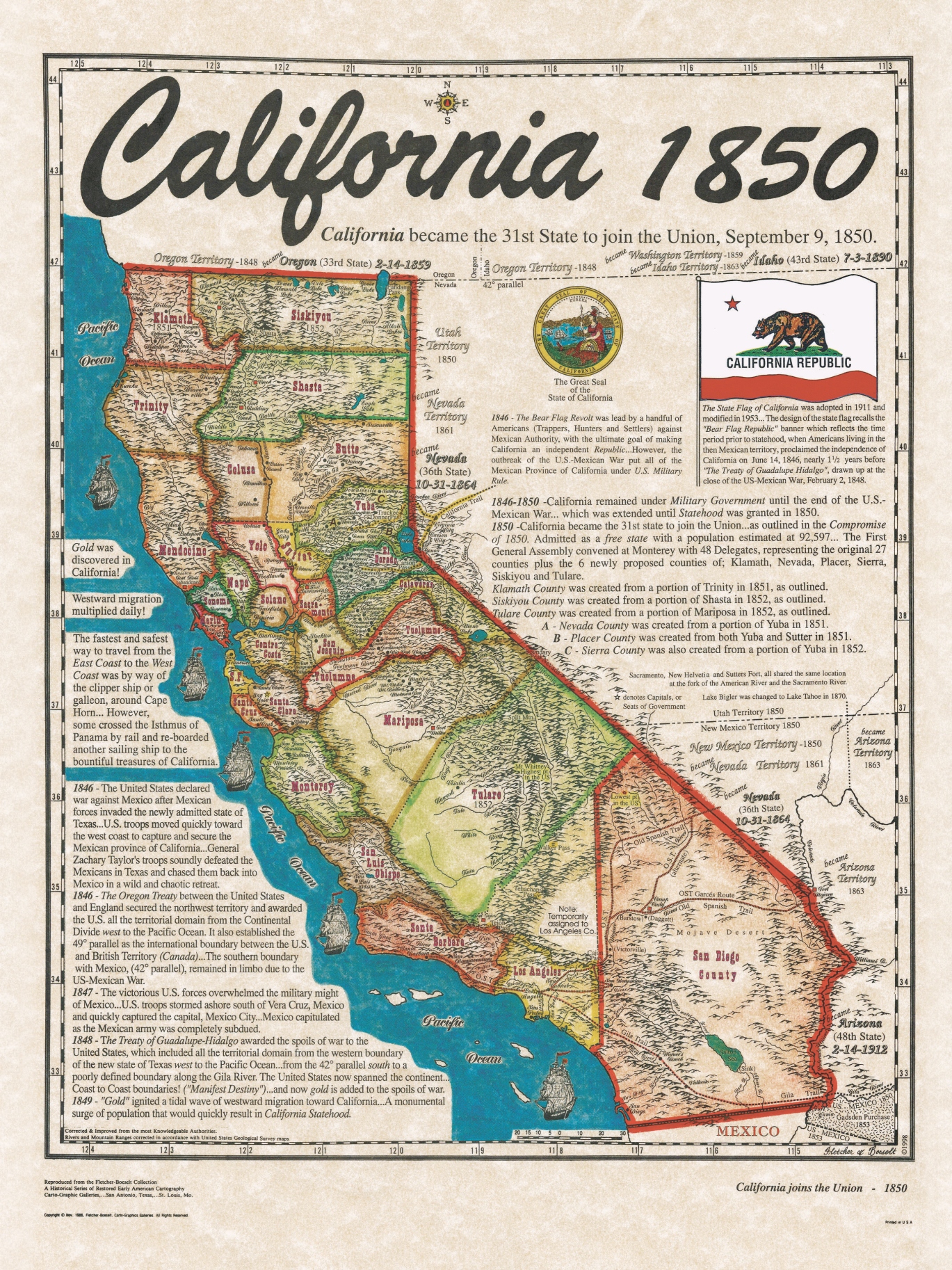
California 1850 31st State
California joined the Union as the 31st state after the Gold Rush attracted a massive influx of settlers. The California Gold Rush of 1848-1855 brought rapid population growth and economic prosperity. Statehood was significant for California's development, as it solidified its political influence and promoted infrastructure growth. The state's diverse population and booming economy made it a key player in the western expansion of the United States.
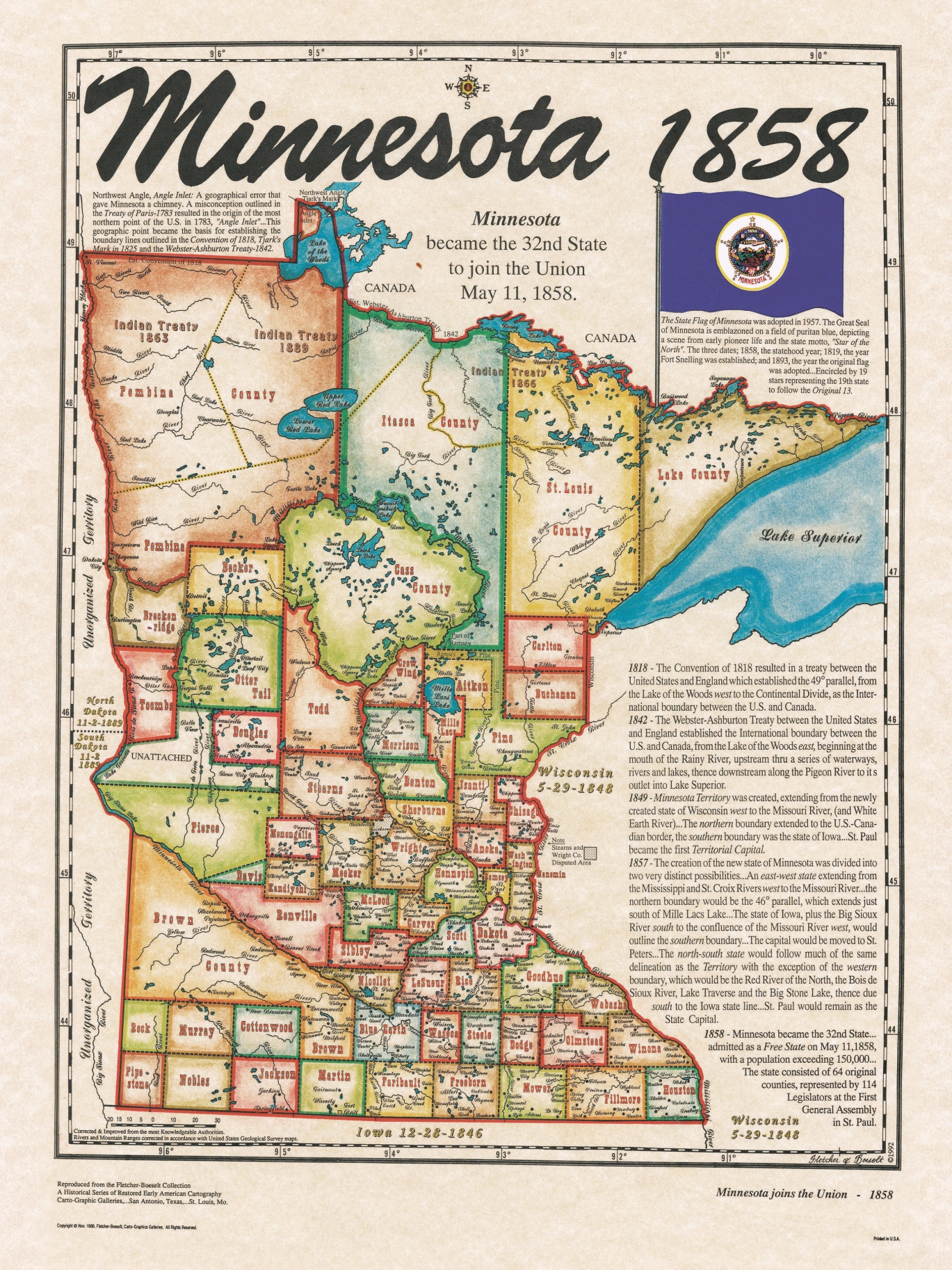
Minnesota 1858 32nd State
In 1858, Minnesota entered the Union as the 32nd state. Settled by Native American tribes and later European fur traders and settlers, Minnesota's statehood marked its transition from a territory to a fully recognized state. Known as the "Land of 10,000 Lakes," Minnesota's natural resources, including timber and iron ore, fueled its growth and economy, leading to its establishment as a state.
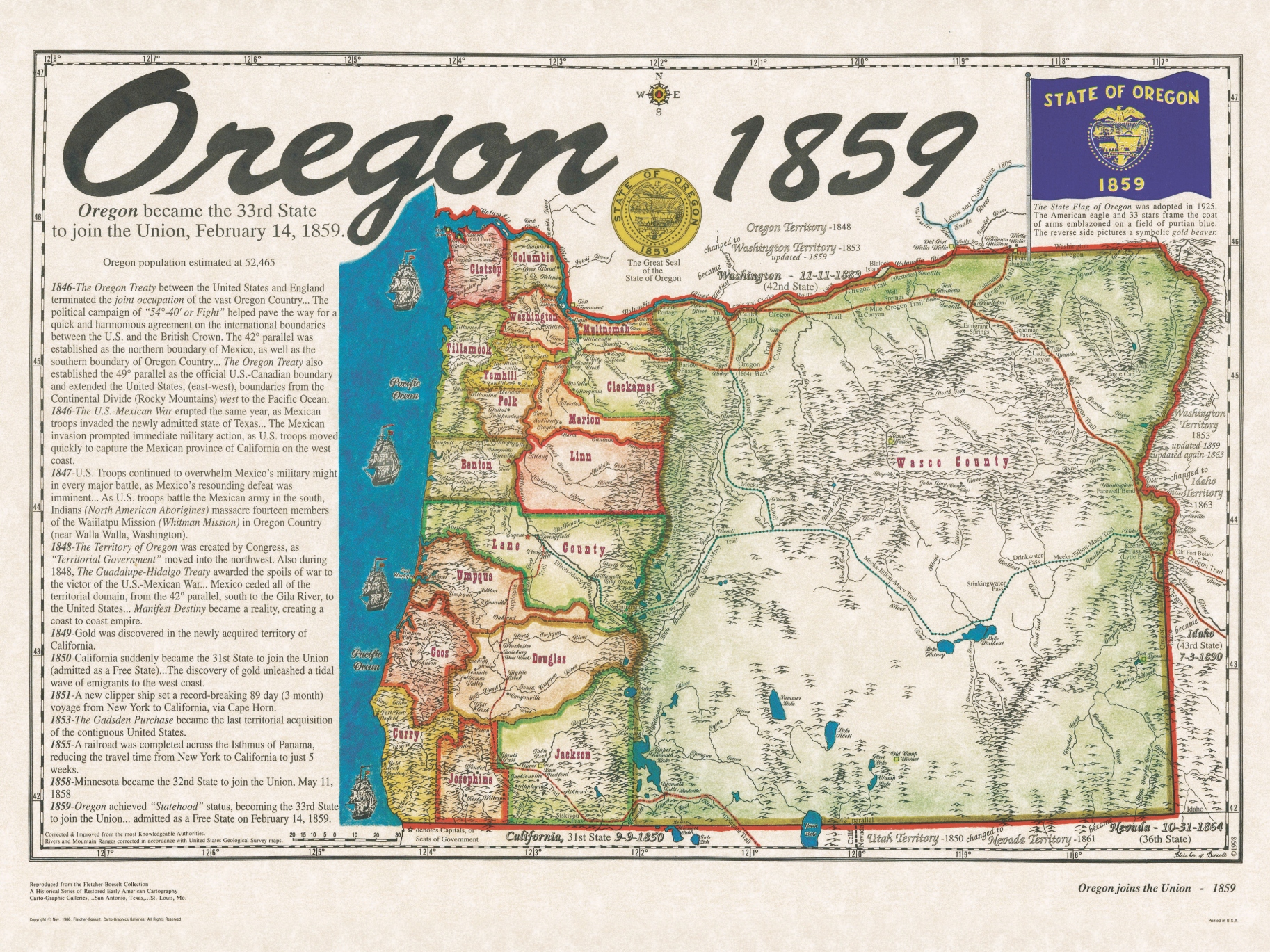
Oregon 1859 33rd State
In 1859, Oregon became the 33rd state of the United States. Known for its stunning landscapes, rich history, and diverse wildlife, Oregon's admission to statehood marked a significant milestone in the westward expansion of the country. At the time, Oregon's economy was largely based on agriculture, fishing, and timber industries. The state's population was growing steadily as settlers arrived to seek new opportunities in this promising region.
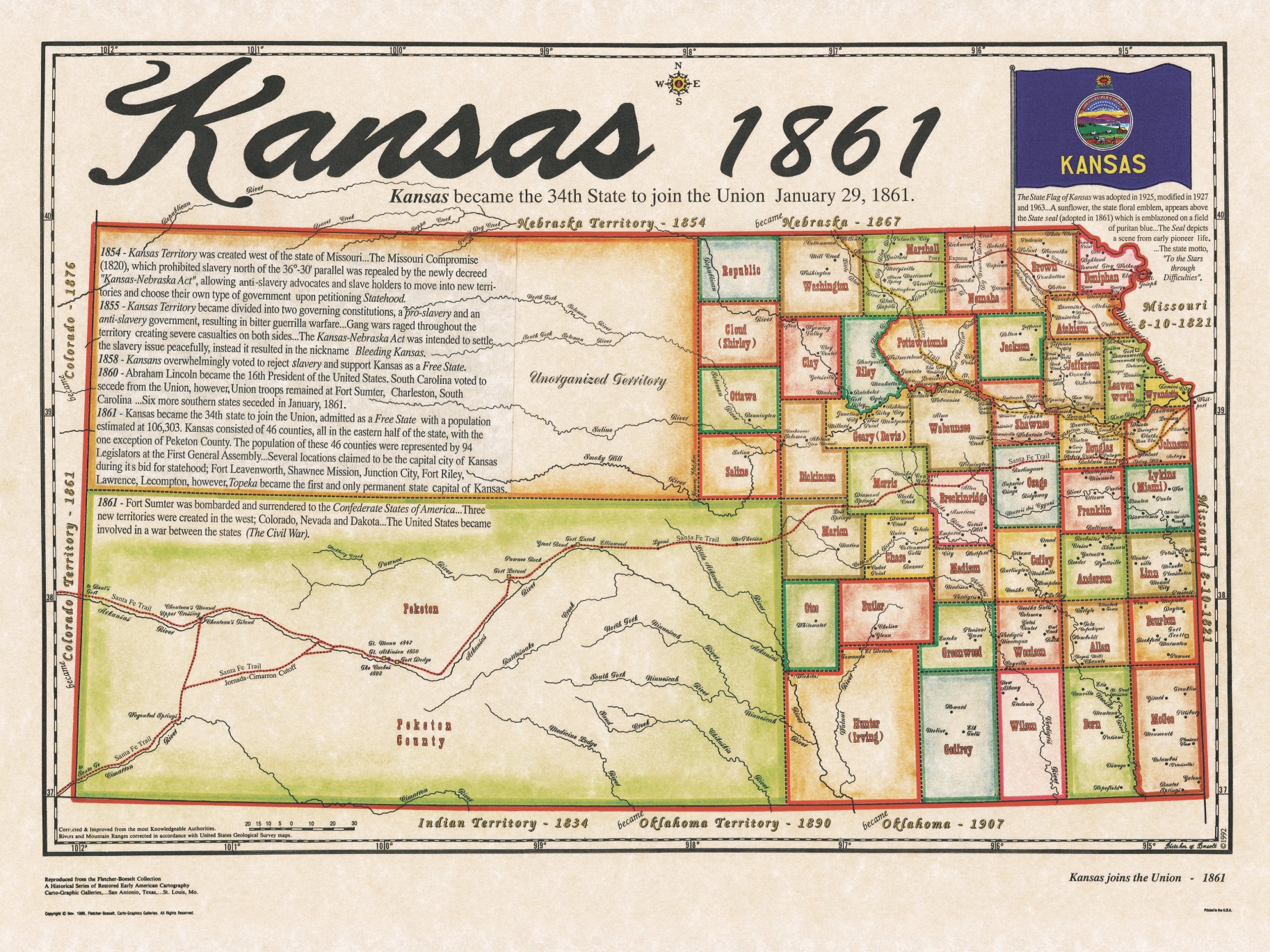
Kansas 1861 34th State
In 1861, Kansas entered the Union as the 34th state of the United States. During this time, Kansas was deeply divided over the issue of slavery, leading to violent conflicts such as "Bleeding Kansas." The state's entry into the Union as a free state marked a turning point in the debate over slavery in the lead-up to the Civil War. Kansas' rich history and turbulent past continue to shape its identity today.
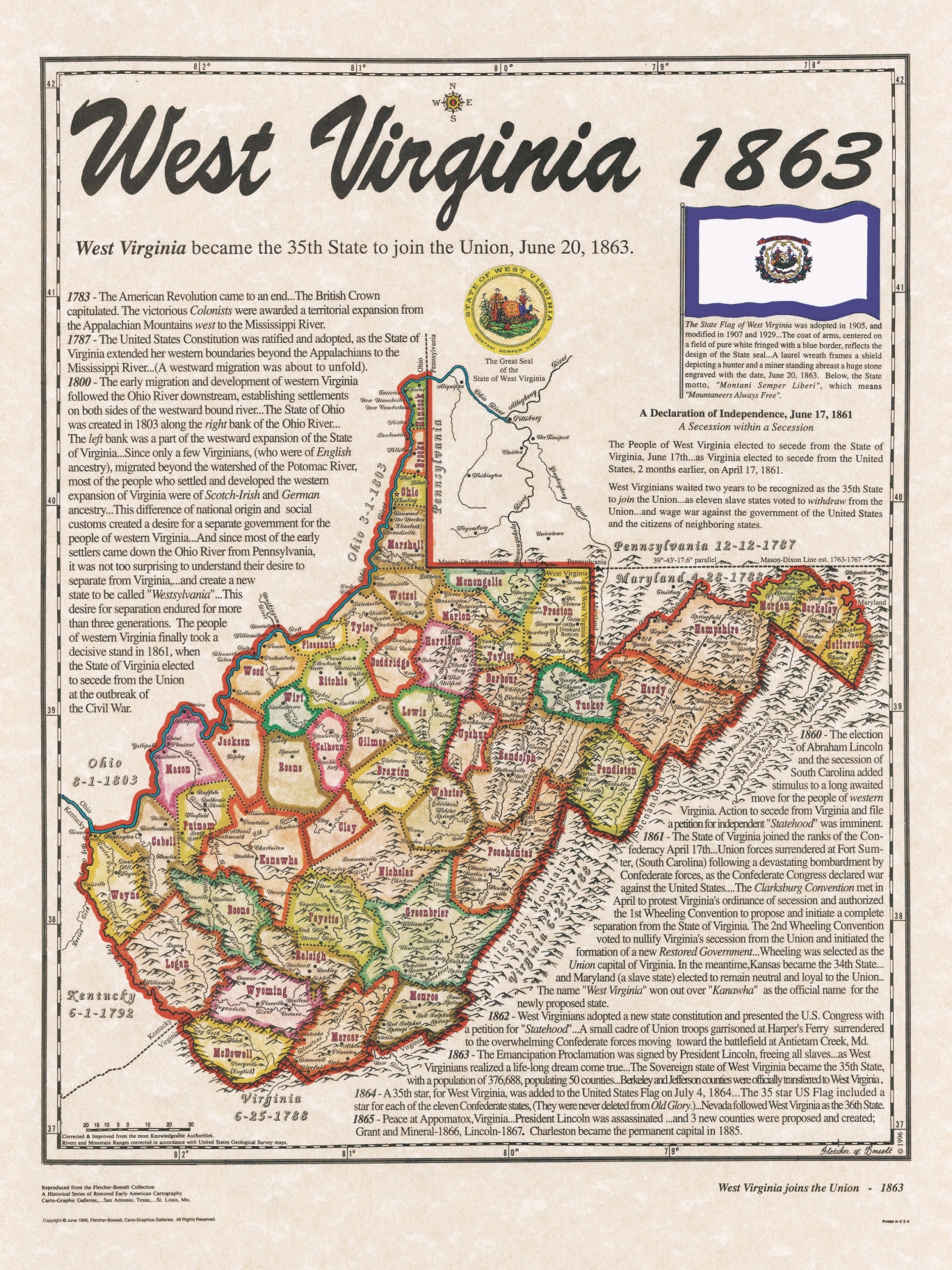
West Virginia 1863 35th State
In 1863, West Virginia became the 35th state of the United States during the Civil War. Formed from Virginia's northwestern counties that opposed secession, West Virginia's statehood was a pivotal moment in the conflict. The region's complex history of slavery, industry, and Appalachian culture influenced its establishment as a separate state. West Virginia's rugged beauty and resilient spirit have since made it a unique and cherished part of the nation.
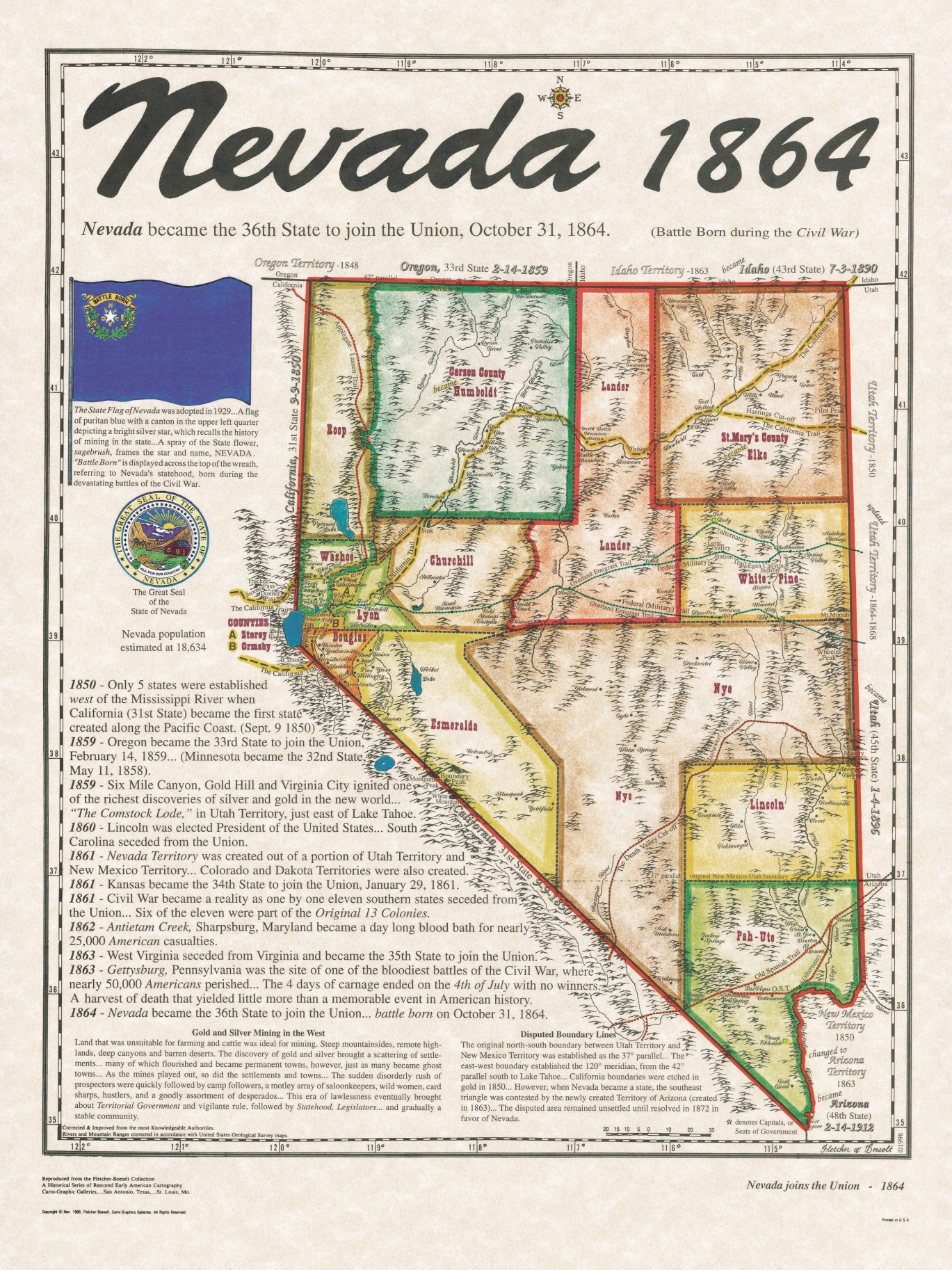
Nevada 1864 36th State
In 1864, Nevada became the 36th state of the United States during the Civil War era. Known for its silver mining boom, Nevada's statehood played a crucial role in financing the Union war effort. The state's rapid growth and economic importance solidified its place in the expanding American West. Nevada's wild west history, including the infamous Comstock Lode, continues to captivate visitors and historians alike.
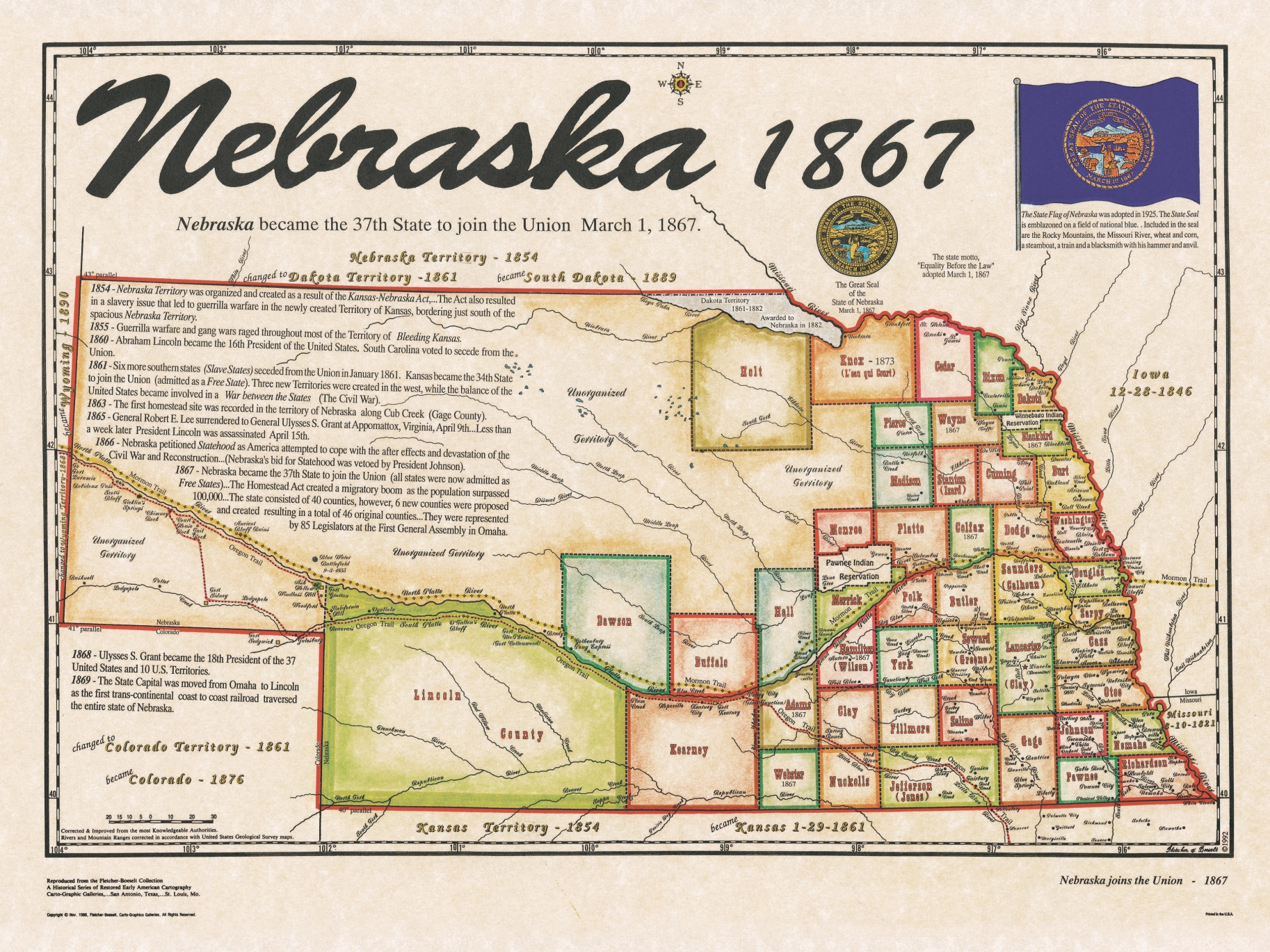
Nebraska 1867 37th State
In 1867, Nebraska joined the Union as the 37th state of the United States. Its establishment was significant as it expanded the nation's reach into the Great Plains. Nebraska's economy was primarily agricultural, with settlers drawn to its fertile land and opportunities for homesteading. The state's indigenous communities, such as the Omaha and Ponca tribes, have long histories in the region. Nebraska's statehood added a new chapter to the story of American westward expansion.


This map collection is protected under copyright laws. Any reproduction, distribution, or unauthorized use is strictly prohibited without the express written permission of the copyright holder.
